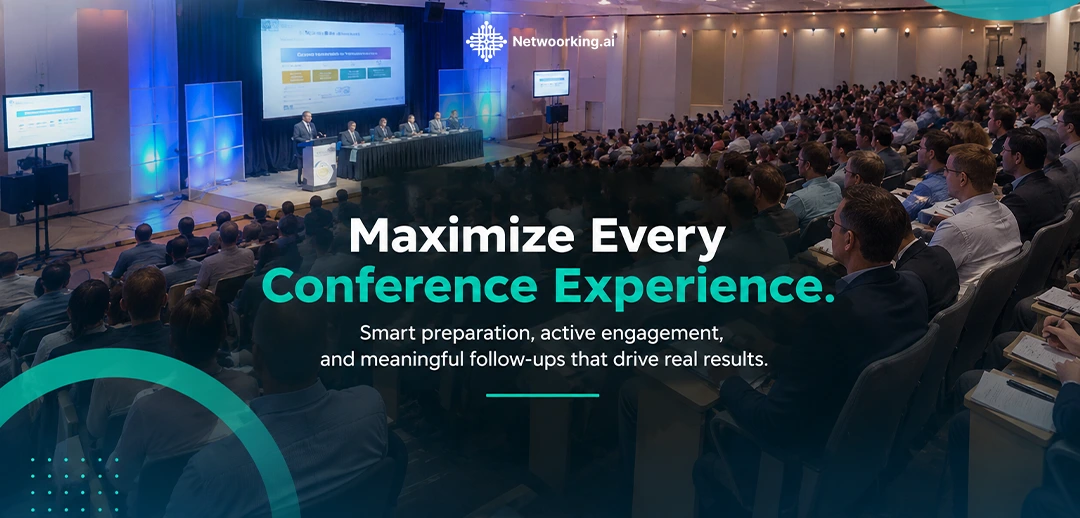
A conference is not just an event, it's an opportunity. You spend money on a ticket, maybe on travel and a hotel too. So the conversations you have there should be worth it. Most people show up unprepared, just collect business cards, nod through a few speaker sessions, and go home with nothing solid. That's not a strategy. That's luck, and luck runs out fast when you're trying to grow a business.
Let's have a straightforward conference attendee guide with a conference networking checklist, and a set of practical business conference tips you can actually use, not just read and forget.
What You Must do Before the Conference
Before attending a conference there must be certain preparation to do with a goal oriented mindfulness:
1# Set Clear Networking Objectives
Don't just "go to the network." That's too vague, and vague goals produce vague outcomes.
Decide what you actually want.
Maybe it's three new clients.
Maybe it's one investor conversation.
Maybe it's a handful of industry experts who can open doors down the line.
Write your goals down somewhere you'll actually check. A clear goal turns a busy Networking Event into a focused mission instead of a blur of small talk and free coffee.
2# Handle Event Registration Early
Early event registration often comes with perks. Cheaper tickets. Better seating. Sometimes even access to a private attendee list before anyone else gets it. Don't wait until the last week to sort this out. Lock in your spot, then start your prep with time to spare. The earlier you register, the earlier you can start building your plan around the people and sessions that matter most.
3# Study the Conference Agenda
Look through the conference agenda before you land. Circle the panel discussions and speaker sessions that matter most to you, and skip the ones that don't. Note the times, note the rooms, and build a rough plan for your day. Walking in blind means missing the sessions that actually align with your goals, and it means wasting hours drifting between rooms with no real reason.
4# Research Attendees ahead of Time
Most conferences share an attendee list or an app with searchable profiles. Research attendees who match your networking objectives, and make a short list of people you'd genuinely like to meet. Look at their role, their company, and what they've posted recently if you can find it. This single step is what separates a professional networking at conferences approach from just wandering the halls hoping for a lucky encounter.
5# Sort your Travel Planning & Hotel Booking
Confirm your travel planning and hotel booking a few weeks out, not the night before the event starts.
Book somewhere close to the venue if you can afford it. Less time stuck in traffic or hunting for parking means more energy left over for actual conversations once you're there, instead of showing up frazzled and distracted.
6# Polish your Elevator Pitch
You'll say it a dozen times a day, so make it count every single time. A good elevator pitch is short: who you are, what you do, and who you help. Practice it out loud until it sounds natural, not rehearsed or robotic. This is where personal branding starts, long before you even walk through the door, because the first impression people form of you often comes from these fifteen seconds.
7# Prepare your Business Cards & Digital Profile
Yes, business cards still matter, even in 2026, especially at larger business networking events where hundreds of people are moving fast.
Bring enough, and keep them somewhere easy to reach
Also make sure your LinkedIn and your Networking AI profile are current and specific
Many attendees will look you up before or after they talk to you
An outdated profile undercuts everything you just said in person.
8# Try Networking AI before the Event
If you have access to an AI Networking Platform like Networking AI, use it early instead of waiting until you arrive.
Set your goals, your industry, and what you're specifically looking for in a connection.
Networking AI will start suggesting meaningful introductions before you even land,
Using smart matching to save you hours of guessing once you're on-site.
This is one of the simplest conference networking tips available, and most attendees still skip it.
Things to Do During the Conference
Following are ready to do moves during your conference:
9# Start conversations with real questions
Skip "What do you do?" It's tired, overused, and it rarely leads anywhere interesting. Ask something sharper instead.
"What session gave you the best idea today?" works far better, because it invites a real answer instead of a rehearsed one. This is a basic conference networking strategy, but almost nobody actually does it. Real questions get real answers, and real answers are what turn strangers into contacts worth keeping.
10# Sit in on Panel Discussions with Intent
Don't just attend panel discussions passively from the back row
Take notes, even short ones
Approach a panelist afterward with a specific question about something they said
Speakers remember people who engage with their actual content
A thoughtful follow-up question can turn a five-minute exchange into a genuinely useful relationship
11# Visit Exhibition Booths with a Purpose
Exhibition booths are full of people ready and willing to talk business, but most attendees walk right past them. Don't rush by. Stop, ask one specific question, and see if there's a real fit for both sides. Some of the best collaboration opportunities at any conference come from a five-minute chat at a booth nobody else bothered to visit, simply because everyone assumed it wasn't worth their time.
12# Use Appointment Scheduling Tools on the Spot
If the event app or Networking AI supports appointment scheduling, use it throughout the day, not just before the event starts. Spot someone interesting between sessions? Send a quick request for fifteen minutes tomorrow morning, or use SpeedConnect for a fast introduction on the spot.
Lock it in immediately, before the moment passes and the conversation gets forgotten in the noise of the next session, the next booth, and the next crowded hallway.
13# Capture Details Right After Each Conversation
Don't rely on memory alone, especially after a long day of back-to-back conversations. After every meaningful introduction, jot down two things:
what they need, and something personal you talked about.
If you're using Networking AI, let the AI Notes Taker capture the key points for you automatically, so nothing gets lost.
This takes ten seconds and makes a real difference later.
It's what makes your future follow-up emails feel personal instead of generic, which is exactly what separates a memorable connection from a forgotten one.
What You Need to Do After the Conference
14# Send follow-up emails within 48 hours
This is the step most people skip, and it's the one that matters most of all.
Conference follow-up should happen fast, while you're still fresh in someone's memory and the conversation still feels recent to them too.
Reference something specific from your talk. Propose one clear next step. Keep it short, direct, and easy to say yes to.
15# Focus on Reconnecting with Contacts, Not Collecting Them
A pile of business cards sitting in a drawer is worthless. The real work starts after the conference ends, not during it. Spend the next two weeks reconnecting with contacts, one conversation at a time, instead of mass-messaging everyone you met. Turn a handful of genuine relationships into actual business, whether that's a partnership, a new client, or a mentor who opens doors you couldn't open alone.
Start Networking Smarter
Networking AI handles the guesswork for you, from smart matches before the event to SpeedConnect calls once you're in the room. Join Networking AI and connect with the right professionals at your next conference.
Conclusion
Most people treat a conference like a lottery ticket show up, hope for the best, go home with nothing to show for it. A little planning changes that completely. Handle your travel planning and hotel booking early. Set real networking objectives before you even pack your bag. Use the tools available to you, including an AI Networking Platform if the event offers one.
Ask better questions in the room instead of falling back on small talk. Follow up like you actually mean it, not as an afterthought three weeks later. That's the whole conference success strategies playbook, laid out in fifteen simple steps. Nothing flashy. Just the basics, done properly, every single time you walk into a room full of people worth knowing.
Keep this conference checklist somewhere you'll actually see it again, and run through it before your next event. A little preparation is the difference between a wasted trip and a genuinely useful one.
Frequently Asked Questions (FAQ’s)
Q. How many people should I try to meet at one conference?
Fewer than you think. Ten focused, quality conversations will beat fifty rushed ones every single time. Depth matters more than volume, and depth is what actually converts into business later.
Q. Is it worth using an AI Networking Platform if I already know a lot of people at the event?
Yes, absolutely. Even a strong existing network benefits from smart introductions. It surfaces people you wouldn't have found on your own, which is where a lot of the best collaboration opportunities tend to come from, especially at larger business networking events with hundreds of attendees.
Q. What if I forget to follow up right away?
Late is still better than never. Send your follow-up emails as soon as you remember, even if it's a week later than you'd have liked. Just be honest about it: Sorry for the delay, this conference was a lot to process.
Q. Should I connect on LinkedIn before or after the conversation?
Have the real conversation first, in person, without a screen between you. Then send a LinkedIn request with a short note mentioning what you talked about, so it doesn't get lost among dozens of other new connections from the same event.
Q. Does conference planning really need to start weeks in advance?
For most people, yes. Good conference planning is quiet, unglamorous work, and it happens long before the event itself. The people who research attendees, map out the agenda, and set clear goals ahead of time are almost always the ones who leave with something real.
Get the next article in your inbox
Stay updated with practical insights, product updates, and networking tips — delivered straight to your inbox.