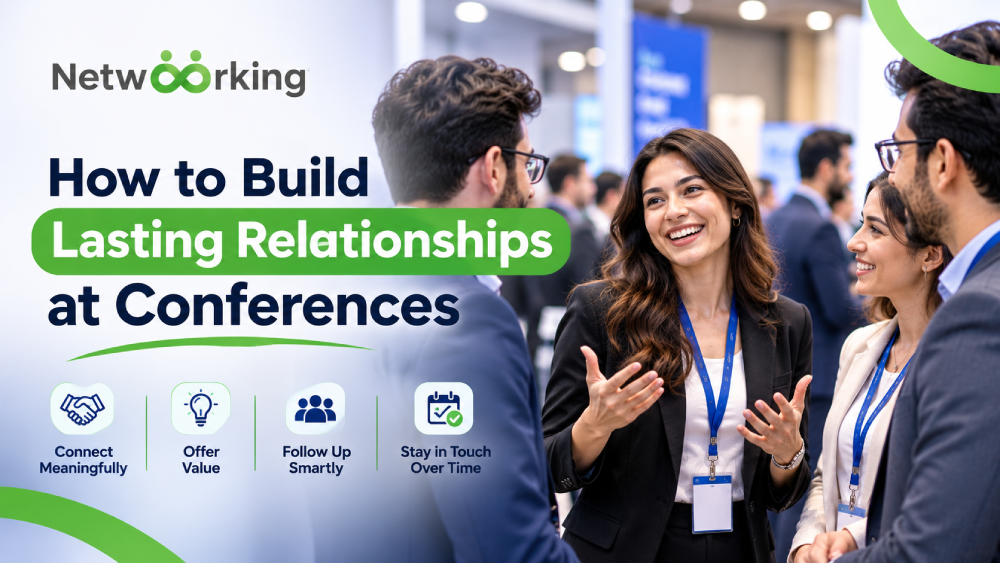
Most people leave a conference with a tote bag, a pile of business cards, and very few real connections. The sessions are usually fine. The problem is that attendees are expected to mingle with no structure and no reason to start a conversation. The right networking activities fix that by giving people a purpose, a format, and a little push.
How We Can Make Networking Activities More Engaging?
Here are the formats that raise attendee engagement and turn a crowded venue into a room of useful conversations.
Start with Icebreaker Games
Even confident professionals freeze when they walk into a room of strangers. A well-designed icebreaker game lowers the barrier immediately because it gives everyone a ready-made opening line. The best ones are quick, a little playful, and tied to the event’s theme.
Some formats that work well:
Networking bingo: attendees collect signatures from people who match prompts like “has launched a startup” or “speaks three languages.”
Two truths and a goal: each person shares two facts and one professional goal, which invites follow-up questions.
Conference scavenger hunt: teams complete small challenges across the venue, which pushes people to visit sponsor booths and unfamiliar corners.
These activities work because they replace the dreaded “So, what do you do?” with something more memorable. Run one in the first thirty minutes, while energy is highest and nobody has settled into a corner yet.
Use Speed Networking to Maximize Introductions
If you want the most introductions in the least time, speed networking is hard to beat. Attendees rotate through short, timed conversations, usually three to five minutes each, and a bell or timer signals the switch. The time limit removes the awkwardness of ending a conversation, because everyone knows the clock will do it for them.
To get the most from speed networking, give people a simple prompt for each round, such as “share one challenge you’re working on.” Seat participants in two facing rows so that moving on is easy. Better still, group people by interest or industry so that every round has a reasonable chance of leading somewhere. A single session can produce a dozen quality introductions, which is more than most attendees manage in a full day of wandering.
Create Smaller, Focused Conversations
Large halls overwhelm people, and small groups put them at ease. Breaking attendees into focused formats is one of the most reliable ways to deepen conference networking, because it gives everyone room to speak and be heard.
Consider adding:
Topic-based roundtables: ten or twelve people discuss a single subject, led by a volunteer facilitator.
Mentor corners: experienced professionals hold open office hours for anyone who wants career or business advice.
Peer pods: small groups of five to six meet at several points during the event and share takeaways from the sessions they attended.
Walking meetings: attendees pair up for a short walk outdoors, which feels more relaxed than standing in a crowded lobby.
Peer pods are especially valuable because they bring people back together more than once. Familiarity builds quickly when the same faces return, and a second conversation is where a casual contact starts becoming a real relationship.
Let Technology Do the Matchmaking
Organizers have long wished that attendees could find the right people without wading through hundreds of badges. Technology now makes that practical. Event apps and AI-driven platforms can suggest introductions based on goals, industries, and interests, so attendees spend their limited time on conversations that matter. Platforms like netwoorking.ai are built for exactly this, helping professionals discover relevant people and plan their conference networking before they even arrive.
Good matchmaking tools also make it easy to schedule short meetings in advance. Pre-booked conversations mean attendees arrive with a plan, and nobody has to hover at the edge of a group hoping to be noticed.
Make the Follow-Up Part of the Plan
A great conversation is wasted if it ends at the exit. The follow-up is where most of the value is created, yet it is the step people skip most often. Organizers can help by building it into the event itself.
Encourage attendees to send a short message within 48 hours, referencing something specific from the conversation. Provide a shared contact list or a digital directory so people can find each other afterward. A post-event virtual meetup or discussion group keeps momentum going and gives attendees a reason to reconnect. When the follow-up is treated as part of the experience and not an afterthought, attendee engagement keeps growing long after the closing keynote.
Conclusion
Engaging conferences are designed, not accidental. When organizers combine icebreaker games, speed networking, small-group formats, smart matchmaking, and a deliberate follow-up, attendees stop wandering and start connecting. You don’t need to run every activity. Pick two or three that fit your audience, run them well, and measure what works. People will remember how the event made them feel, and a well-run conference makes them feel connected.
FAQs
1. How many networking activities should a conference include?
Two to four is usually enough. Too many structured sessions leave no time for organic conversations.
2. What is the best activity for shy attendees?
Small roundtables and peer pods work best, because they offer a low-pressure setting and a clear topic to talk about.
3. How long should speed networking rounds last?
Three to five minutes per round is ideal. It is long enough for a real exchange and short enough to keep energy high.
4. How can organizers measure networking success?
Use post-event surveys, track meetings booked through the event app, and ask attendees how many useful connections they made.
Get the next article in your inbox
Stay updated with practical insights, product updates, and networking tips — delivered straight to your inbox.