Professional Networking Platform vs. Traditional Networking
Primary keyword: Professional Networking platform
Building meaningful professional relationships is essential for career development, business growth, and new opportunities. Traditionally, people relied on conferences, business meetings, and industry gatherings to connect with others.
Today, digital technology has introduced new ways to build relationships without geographical limitations. A professional networking platform allows individuals, startups, and businesses to discover relevant connections, exchange ideas, and collaborate online.
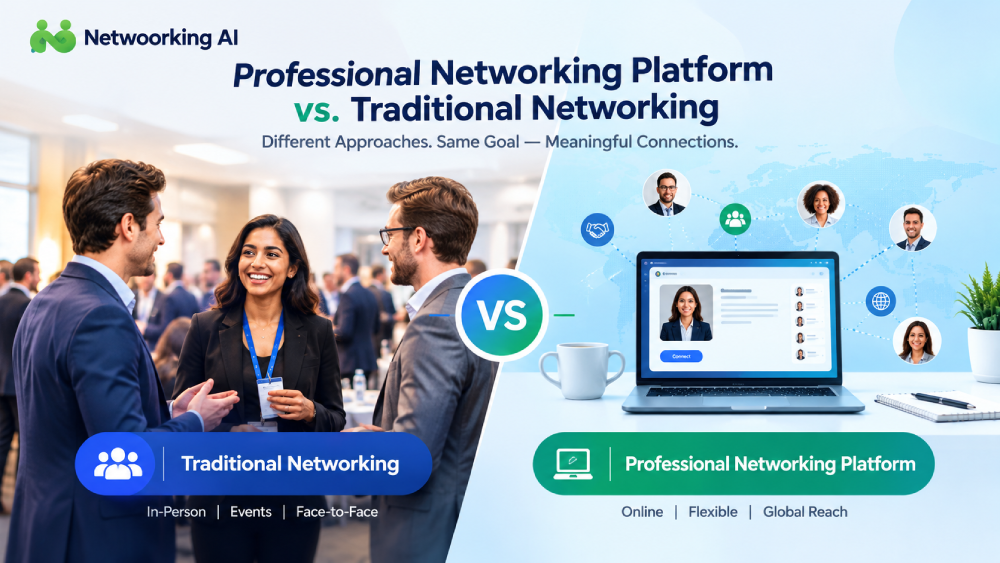
Although traditional networking remains valuable, digital networking offers flexibility, accessibility, and opportunities to connect with a broader audience. Understanding the differences between these approaches can help professionals choose the right strategy for their goals.
What Is Professional Networking?
What is professional networking? It is the process of building and maintaining relationships with people who share professional interests, career goals, or business objectives. These connections can lead to job opportunities, partnerships, mentorship, and knowledge sharing.
Traditional networking usually happens in person at conferences, seminars, exhibitions, and business gatherings. In comparison, electronic networking uses digital channels to connect people through online communities, virtual meetings, and networking applications.
A professional networking platform brings these digital interactions together in one accessible environment. Instead of depending entirely on physical events, professionals can discover potential collaborators, communicate with industry experts, and maintain relationships over time.
Traditional Networking: Building Relationships Face-to-Face
Traditional networking has been an important part of professional development for decades. Meeting someone in person allows individuals to communicate naturally, observe body language, and establish personal connections.
Business conferences, trade shows, seminars, and industry exhibitions provide opportunities to meet potential clients, investors, and partners. These interactions can create a strong first impression and help professionals build trust more naturally.
For example, a startup founder attending an industry conference might meet an investor during a networking session. A short conversation could lead to a follow-up meeting, funding discussions, or a long-term business partnership.
However, traditional networking also has limitations. Travel expenses, registration fees, geographical restrictions, and busy schedules can make attending events difficult. Furthermore, professionals may spend considerable time meeting people who do not align with their objectives.
That is why many businesses are exploring digital alternatives to complement their existing networking strategies.
Professional Networking Platform: Connecting Beyond Geographical Boundaries
A professional networking platform makes it easier to discover and communicate with relevant people regardless of their location. Professionals can create profiles, showcase expertise, explore opportunities, and build relationships without attending every industry event physically.
Unlike traditional networking, digital platforms can support ongoing communication before, during, and after meetings. Users can review profiles, identify shared interests, and initiate conversations based on specific professional goals.
For instance, a technology startup in Pakistan can connect with a potential investor in Canada or a software development partner in the United Kingdom. Such connections may be difficult to establish through local networking events alone.
Digital networking also supports flexible communication. Professionals can participate in discussions, schedule virtual meetings, and maintain relationships according to their availability.
However, online networking requires a thoughtful approach. Generic messages, incomplete profiles, and excessive promotional content can reduce engagement. Meaningful connections still depend on relevance, trust, and consistent communication.
Key Differences Between Traditional and Digital Networking
Both networking approaches help professionals establish relationships, but their methods and advantages differ.
1. Accessibility and Convenience
Traditional networking requires people to attend physical gatherings at specific locations and times. Digital networking removes many of these barriers by allowing users to connect remotely.
A professional networking platform can help busy entrepreneurs, freelancers, and employees discover opportunities without travelling long distances. This convenience is especially useful for professionals working across multiple time zones.
2. Networking Costs
Attending traditional events may involve transportation, accommodation, tickets, and other expenses. Online networking can reduce many of these costs, although some platforms charge subscription or participation fees.
Businesses can use digital networking to expand their reach while managing budgets more efficiently.
3. Quality of Connections
Face-to-face conversations provide opportunities to establish rapport quickly. Digital platforms, meanwhile, can help users identify potential connections based on professional interests, experience, and business objectives.
The quality of either approach depends on how effectively individuals communicate and follow up. Neither method automatically guarantees meaningful relationships.
4. Opportunities for Long-Term Engagement
Traditional events often last a few hours or days. Maintaining relationships afterward requires deliberate follow-up.
Digital networking makes continued engagement easier through messaging, online communities, virtual meetings, and professional discussions.
5. Audience Reach
Traditional events generally attract attendees from particular industries, locations, or professional groups. Digital networking can introduce users to people from different markets and backgrounds.
This broader reach can benefit startups seeking international exposure, businesses exploring partnerships, and professionals looking for career advancement.
How Virtual Networking Events Improve Professional Connections?
Virtual networking events allow participants to connect through video conferencing, online communities, and digital event platforms. These events can include expert presentations, interactive workshops, investor introductions, and industry discussions.
Unlike conventional conferences, virtual events can accommodate participants from different countries without requiring travel.
Popular virtual event ideas include startup pitch sessions, online mentoring programmes, professional workshops, industry panels, and virtual business meetups. Organisers can also introduce breakout rooms where smaller groups discuss shared challenges.
To make these events successful, organisers should establish clear objectives, encourage participation, and provide opportunities for follow-up communication.
For example, a startup networking event could introduce founders to investors, marketing specialists, and technology providers. Participants could then schedule individual meetings to explore potential collaborations.
Tips for Networking Events: Making Every Connection Count
Whether attending a physical conference or an online gathering, preparation can improve networking results. The following tips for networking events can help professionals build stronger connections.
Set clear objectives: Identify whether you want to find clients, investors, mentors, or business partners.
Prepare an introduction: Explain who you are, what you do, and what kind of collaboration interests you.
Ask relevant questions: Show genuine interest in other participants' goals, experiences, and challenges.
Participate actively: Contribute meaningful ideas during discussions instead of focusing exclusively on self-promotion.
Follow up promptly: Send a personalized message after meeting someone and suggest a relevant next step.
Maintain relationships: Continue conversations by sharing useful resources, discussing opportunities, or arranging future meetings.
During a round table discussion, participants can exchange perspectives and explore solutions to shared challenges. Similarly, a well-organised roundtable discussion can help professionals learn from different experiences while identifying opportunities for collaboration.
For online gatherings, test your equipment beforehand and ensure you have the need for accessing an online meeting covered, including a reliable internet connection, the appropriate meeting link, and any required software.
Measuring Event ROI and Networking Success
Networking is most valuable when it produces meaningful outcomes. Businesses should therefore evaluate more than attendance numbers or the number of contacts collected.
Event ROI refers to the value generated by an event compared with its costs. Depending on the event's objectives, useful indicators may include qualified leads, partnership discussions, follow-up meetings, customer conversions, and new business opportunities.
Builds face-to-face professional relationships
Connects professionals online worldwide
Enables networking without geographical limitations
Reduces travel and event expenses
Helps identify relevant professionals and partners
Supports ongoing communication and collaboration
Connect participants through online meetings
Include workshops, startup pitches, and webinars
Set goals, ask questions, and follow up
Encourages knowledge sharing and collaboration
Measures networking outcomes against event costs
Choosing the Right Networking Approach
Traditional and digital networking are not competing strategies that businesses must choose between permanently. Each approach offers distinct benefits, and combining them can create a more effective networking strategy.
Traditional events are particularly useful when personal interaction, hands-on demonstrations, and immediate relationship-building are important.
A hybrid strategy can combine in-person conferences with online communities and virtual follow-up meetings.
Conclusion
Professional networking continues to evolve as digital technology changes how people discover opportunities and build relationships. Traditional networking remains valuable for face-to-face interaction, while digital networking makes professional connections more accessible and convenient.
A professional networking platform can help individuals and businesses expand their reach, discover relevant collaborators, and maintain relationships beyond physical events.
Get the next article in your inbox
Stay updated with practical insights, product updates, and networking tips — delivered straight to your inbox.