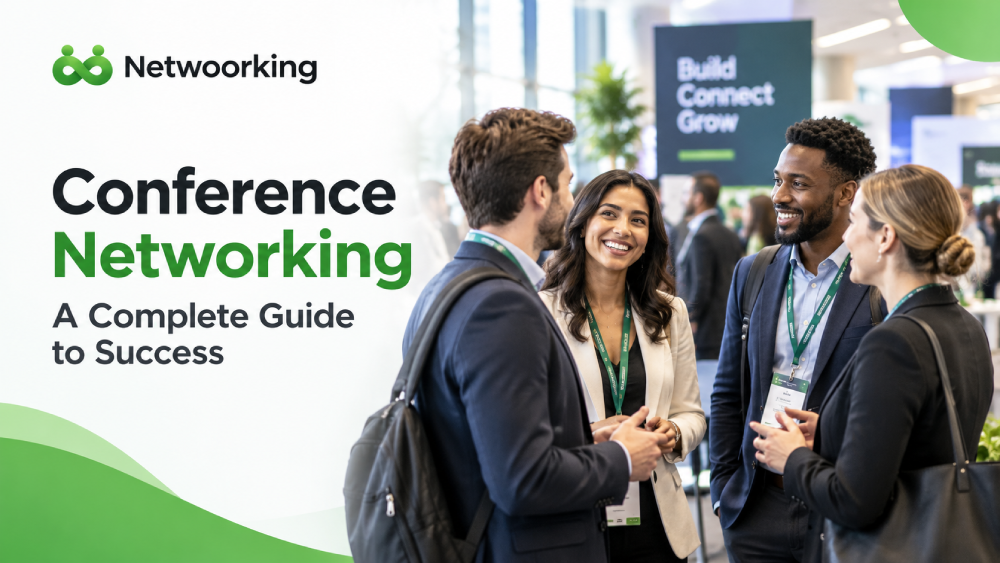
When Sarah walked into her first major industry conference, she had a clear goal: meet potential clients and build relationships that could advance her career. She had business cards, a polished introduction, and a list of speakers she wanted to meet. Yet, after two hours, she had collected several brochures and exchanged only a few words with strangers.
The problem wasn't a lack of confidence or preparation. Sarah had focused on meeting people rather than building connections.
Her experience changed when she learned how professional conference networking works in practice. Instead of chasing introductions, she began approaching conversations with curiosity, listening carefully, and following up with purpose.
How to Network Effectively at Professional Conferences?
Here's how you can apply the same approach at your next conference.
Start With a Plan, Not Just a Guest List
Before her next event, Sarah researched the speakers, participating companies, and attendee profiles. She identified three people whose work aligned with her professional goals and prepared questions about their projects.
This preparation gave her a clear direction without making every interaction feel like a sales pitch. Effective conference networking tips include:
Set two or three realistic goals, such as meeting potential partners or learning about a new industry.
Research relevant attendees and speakers before the event.
Review the agenda to identify suitable sessions and networking breaks.
A focused plan helps you use your time wisely while leaving room for unexpected conversations. You never know when an unplanned introduction might become your most valuable connection.
Make Your First Conversation Natural
At her next conference, Sarah noticed a marketing director standing near the coffee station. Instead of delivering her rehearsed introduction immediately, she asked, "What session have you found most useful so far?"
This is one of the most useful conference conversation starters approaches: begin with the shared experience of attending the event. You can also ask questions such as:
What brought you to this conference?
Which industry trend are you following most closely?
What project are you currently excited about?
Focus on Giving Value Before Asking for Help
Later that afternoon, Sarah met a startup founder looking for ways to improve brand visibility. Rather than immediately offering her services, she shared a relevant resource and suggested an industry contact who might help.
The founder appreciated the recommendation and asked to exchange contact details.
Sarah discovered that professional conference networking becomes more effective when you approach relationships with a willingness to contribute. Value can mean sharing knowledge, offering a useful introduction, or simply listening to someone's challenge. To make your conversations more productive:
Share insights that are relevant to the other person's interests.
Offer introductions only when there is a genuine professional fit.
Avoid turning every interaction into a pitch.
Respect people's time and interest in continuing the conversation.
Use Technology to Find Relevant People
At larger events, finding the right people can be difficult. Sarah began using the event's conference networking app to review attendee profiles and arrange short meetings before sessions filled her schedule. Digital tools can help you identify shared interests, request introductions, and organize your time. Some platforms also offer attendee matching, messaging, and calendar integration.
However, technology should support personal interaction rather than replace it. Use it to identify relevant contacts, then focus on having thoughtful conversations when you meet. This approach is particularly useful at startup networking events, where founders, investors, and service providers may have different objectives but overlapping interests.
Read the Room and Adapt Your Approach
Not every conversation will develop naturally. Sarah learned to recognize when someone was engaged and when they needed to move on to another session.
If a person asks questions, maintains the conversation, and discusses shared interests, it may be appropriate to continue. If they appear distracted or mention an upcoming commitment, thank them and end the interaction politely. For more comfortable networking in conferences, consider these habits:
Join small group discussions before approaching larger circles.
Give others an opportunity to speak.
Keep initial introductions brief and relevant.
Exchange details when both people want to stay connected.
These habits make networking more respectful and comfortable, particularly for first-time attendees.
Follow Up While the Conversation Is Fresh
The most important moment in Sarah's networking journey came after the conference. The following morning, she messaged the marketing director, mentioning their discussion and sharing the resource she had promised.
She also contacted the startup founder with a brief note about their conversation. Neither message demanded an immediate meeting or sale. Both offered a natural way to continue the relationship. Following up is essential to professional conference networking because it turns a brief introduction into an ongoing conversation. For effective follow-ups:
Contact people within 24–48 hours when practical.
Mention a specific topic you discussed.
Deliver any resource or information you promised.
Suggest a meeting only when there is a clear reason.
Personalized messages are more meaningful than generic requests sent to every person you meet.
Measure Success by Relationships, Not Business Cards
A week after the event, Sarah reviewed her contacts. She had met fewer people than she originally intended, but two conversations had developed into useful professional relationships, and one led to a follow-up meeting.
That outcome taught her an important lesson: networking success is not measured by the number of people you meet but by the quality of the relationships you build. Keep track of promising contacts, relevant discussion points, and next steps. Over time, consistent communication can help you develop a professional network that supports collaboration, learning, and career growth.
Conclusion
Effective networking begins before the conference and continues long after it ends. Sarah's experience shows that preparation, genuine curiosity, generosity, and thoughtful follow-up can transform ordinary introductions into valuable professional relationships.
Apply these practices at your next event, stay open to unexpected conversations, and focus on building trust rather than collecting contacts. With consistent effort, professional conference networking can become a valuable part of your long-term career strategy.
FAQs
1. How do I start a conversation at a conference?
Ask an open-ended question about the event, a session, or the person's work.
2. How many people should I meet?
Prioritize a manageable number of relevant, meaningful connections.
3. When should I follow up?
Ideally, within 24–48 hours of meeting someone.
4. What is the biggest networking mistake?
Focusing on self-promotion instead of building genuine relationships.
Get the next article in your inbox
Stay updated with practical insights, product updates, and networking tips — delivered straight to your inbox.