How Smart Badges Are Revolutionizing Events?
Events are no longer limited to printed credentials and manual check-in desks. From conferences and trade shows to schools and corporate gatherings, technology is changing how people enter, interact, network, and share information. At the center of this shift are smart badges connected, programmable credentials that combine identification with digital functionality.
As organizers look for ways to create more connected and measurable experiences, smart badge technology is becoming an increasingly important part of modern event infrastructure.
What Are Smart Badges?
So, what are smart badges? Simply put, they are wearable identification devices equipped with technology that allows them to perform functions beyond displaying a person's name and organization.
A traditional badge identifies an attendee. A smart badge can identify, connect, communicate, and sometimes even display changing information. For example, an attendee could use a badge to:
Enter different event areas
Register attendance automatically
Exchange contact information
Interact with exhibitors
Display their name, role, or schedule
Access digital event resources
Participate in interactive activities
This makes digital name badges particularly useful for large events where organizers need faster processes and attendees expect convenient, technology-enabled experiences.
How Does Smart Badge Technology Work?
The technology inside an event badge depends on its purpose. Some solutions rely on a single technology, while advanced systems combine several capabilities.
RFID and NFC
RFID-enabled badges can communicate with compatible readers without requiring physical contact. They can be used for access management, attendance tracking, and movement monitoring.
NFC works at a shorter range and can support intentional interactions such as tapping a badge against a reader to exchange information or trigger an action. These technologies make electronic smart badges useful when organizers need quick identification without relying entirely on smartphones.
Bluetooth Connectivity
A bluetooth smart badge can communicate wirelessly with nearby devices or infrastructure. This can enable location-based experiences, proximity interactions, or automated engagement features, depending on the system.
Bluetooth-enabled solutions can be particularly useful at large conferences where organizers want to create more connected attendee journeys.
QR Codes
Not every smart solution requires sophisticated hardware. QR-enabled badges provide a simple bridge between physical credentials and digital experiences.
An attendee can scan a code to open a profile, event schedule, exhibitor page, registration details, or networking information. This makes QR technology an accessible component of an event badge system.
The Rise of Interactive Name Badges
One of the biggest changes in event identification is the move from static credentials to interactive name badges.
An interactive badge can respond to user actions, display changing information, or connect attendees with digital services. Instead of printing every piece of information permanently, organizers can make the badge part of the event experience.
For example, an attendee's role, session information, or networking status could be displayed digitally. This can reduce the need to reprint badges when information changes. For events focused heavily on networking, best electronic badges for event networking can also make exchanging information faster than manually typing names, phone numbers, or email addresses.
E-Ink and Digital Display Badges
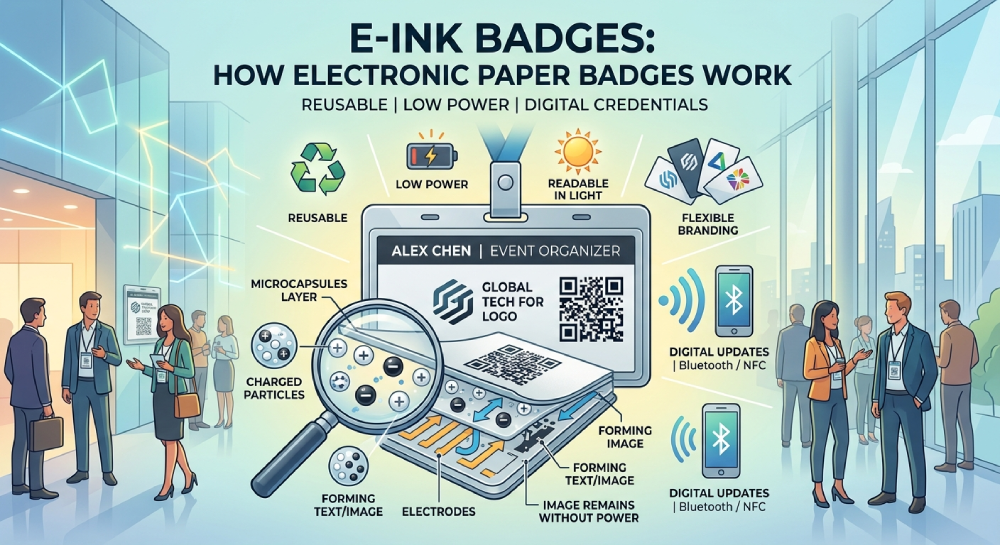
Display technology is another area transforming event credentials. An e ink badge uses electronic paper technology to display information while consuming very little power compared with conventional illuminated screens.
An e-ink name badge can provide a clean, paper-like appearance while allowing information to be updated electronically. Depending on the design, an e ink id badge may display a person's name, role, organization, or other identification details.
There are also smart digital display badge solutions that use small screens to provide dynamic information. These can be especially valuable for events where attendee details, schedules, or messages need to change during the day. For smaller implementations, an e badge clip on screen can provide a wearable digital display without requiring a traditional lanyard-style credential.
How Smart Badges Improve Event Management?
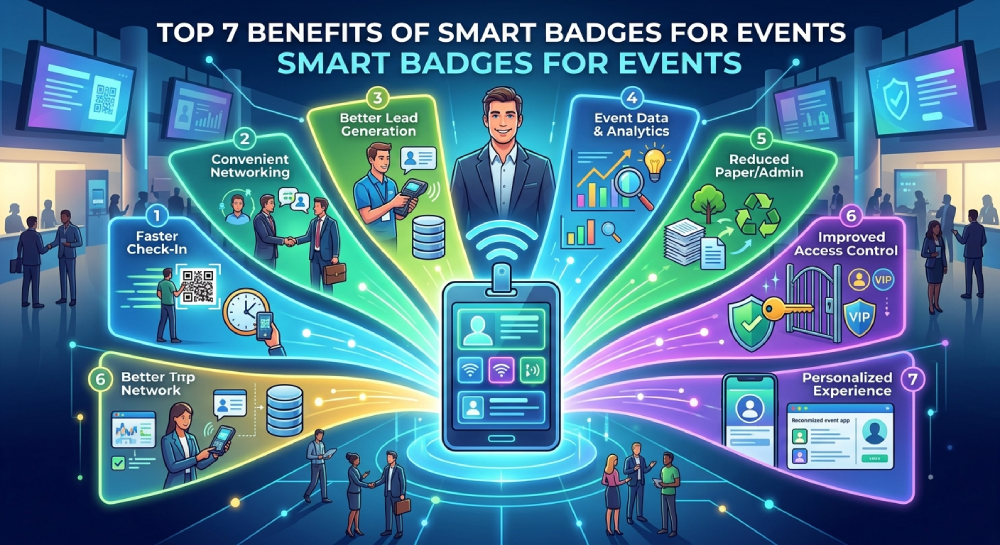
The value of event smart badges extends beyond their appearance. They can help organizers simplify several operational processes.
Faster Attendance and Access
Traditional registration often involves printed lists, manual verification, or barcode scanning. Technology-enabled attendance badges can automate identification and help reduce queues.
Depending on the system, attendees may simply tap or scan their credentials at entry points.
Better Data Collection
An event can generate valuable information about attendance, sessions, exhibitor interactions, and engagement. A connected badge system can help organizers collect this information digitally.
Instead of relying only on post-event surveys, organizers can use event data to understand how attendees interacted with different areas of the event.
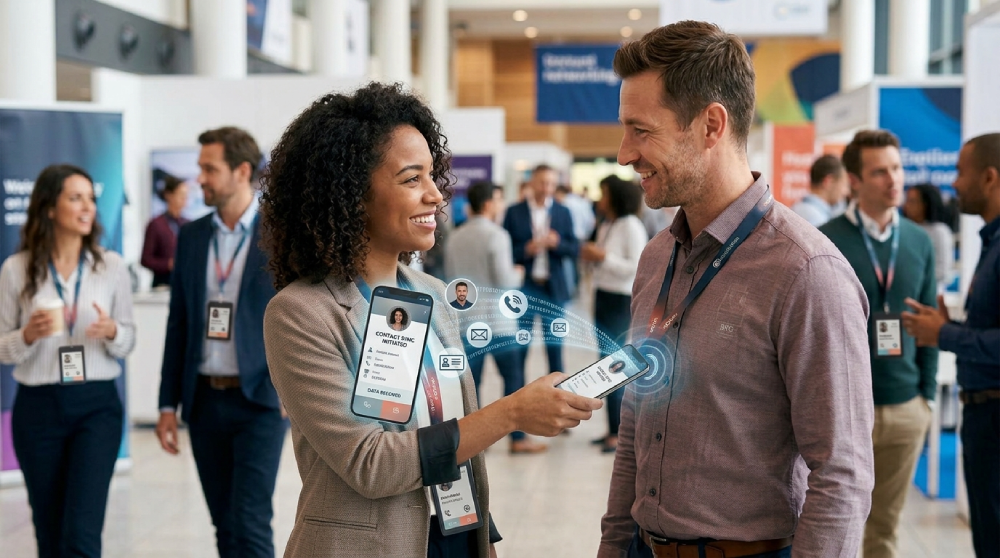
Stronger Networking
Networking is one of the most important reasons people attend conferences and trade shows. Smart badges for conferences can make contact exchange more convenien
t by connecting a badge interaction with a digital profile or contact-sharing platform.
This can turn a simple introduction into a measurable digital connection.
More Personalized Experiences
Modern events often contain multiple sessions, exhibitors, workshops, and activities. Smart credentials can become part of a personalized attendee journey.
For example, a badge could connect an attendee to their registration profile and help deliver relevant information throughout the event.
Smart Badges Beyond Conferences
Although conferences are a major use case, the technology has applications across many environments.
Smart badges for schools can support identification, attendance, access management, and other campus processes. Corporate organizations can use smart ID badges for employee identification and controlled access.
Similarly, trade shows can use smart event badges to connect attendees with exhibitors and capture interactions throughout the exhibition.
The underlying concept remains the same: turning a physical identification credential into a connected digital tool.
What to Look for in an Event Badge Solution
Choosing between different top event badge technology solutions depends on the event's size, objectives, infrastructure, and budget.
Organizers should consider:
Technology: Determine whether RFID, NFC, Bluetooth, QR, e-ink, or another technology fits the use case.
Integration: Check whether the badge works with registration, access control, CRM, or event-management platforms.
Networking: Consider whether attendees can exchange contact information easily.
Display requirements: Decide whether a static printed credential is sufficient or a programmable display is needed.
Scalability: The system should support the expected number of attendees and event locations.
Security and privacy: Attendee information should be handled responsibly and protected through appropriate controls.
The top smart badge providers for conferences may offer different combinations of these capabilities, so comparing functionality rather than simply badge appearance is important.
The Future of Smart Event Badges
The future of smartbadge tech is moving toward credentials that do much more than identify attendees. As wearable technology, wireless communication, digital displays, and event software become increasingly connected, badges can become an interface between attendees and the event itself.
Programmable badges could dynamically update information, support personalized experiences, or respond to event activities. Meanwhile, electronic badges for conferences may increasingly connect physical attendance with digital networking and analytics.
The goal is not simply to replace a printed name tag. It is to create a more connected event environment where identification, access, communication, and engagement work together.
Conclusion
The evolution from traditional name tags to smart conference badges represents a broader transformation in event technology. Whether through RFID, NFC, Bluetooth, QR codes, e-ink, or digital displays, modern credentials can help organizers streamline operations while giving attendees more convenient ways to participate and connect.
As event expectations continue to change, smart badges for events offer a practical way to bridge the physical and digital sides of an experience. From faster attendance management to stronger networking and interactive engagement, these wearable credentials are becoming an important part of the modern event ecosystem.
Get the next article in your inbox
Stay updated with practical insights, product updates, and networking tips — delivered straight to your inbox.