Events are becoming increasingly digital, and event organizers are looking for smarter ways to improve attendee experiences while simplifying event management. Traditional name badges are useful for identification, but modern smart badges for events can do much more. They can support contactless check-ins, networking, lead generation, access control, and attendee engagement through technologies such as QR codes, NFC, RFID, and digital integrations.
What Are Top 7 Benefits of Smart Badges for Events?
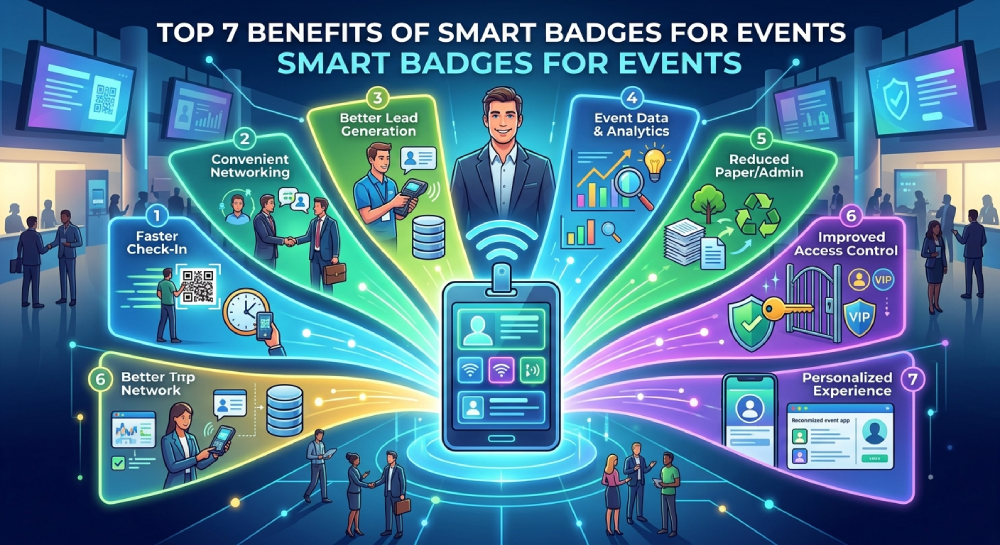
From conferences and exhibitions to corporate gatherings and trade shows, smart badge technology is helping organizers create more connected and efficient events. Here are seven important benefits of using smart badges at modern events.
1. Faster and Easier Event Check-In
Long registration queues can create a poor first impression, particularly at large conferences where hundreds or thousands of attendees may arrive around the same time. Smart badges can make the check-in process faster by using digital identification and contactless technologies.
Instead of manually searching registration lists and verifying information, attendees can use a QR code, NFC-enabled badge, RFID credential, or another digital identification method. Once scanned or activated, their registration details can be verified quickly.
This makes smart conference badges especially useful for high-volume events. A smoother check-in process allows attendees to spend less time at registration and more time attending sessions, visiting exhibitors, and networking.
2. More Convenient Networking
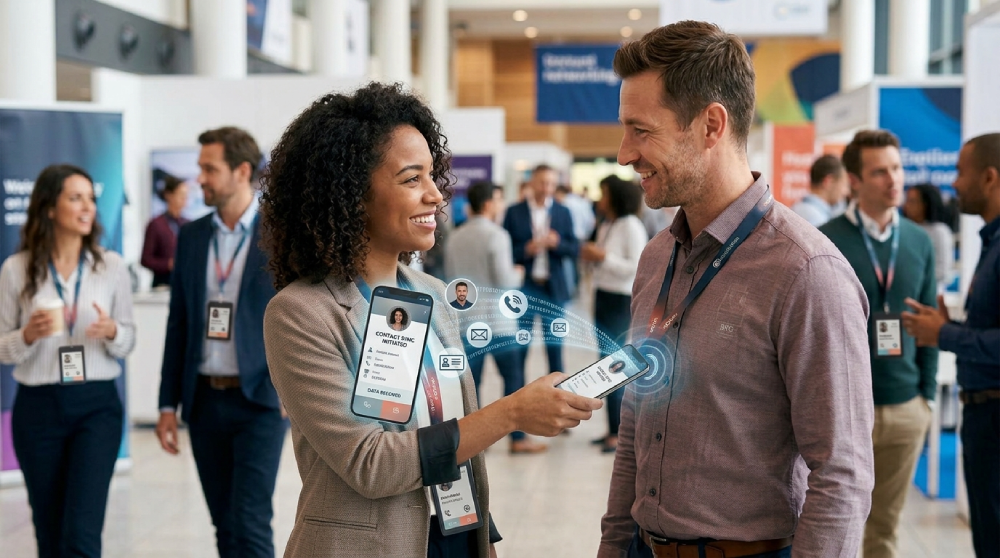
Networking is one of the most valuable parts of conferences and business events, but exchanging business cards can become inconvenient when attendees meet dozens of people.
Interactive name badges can make professional networking easier by allowing attendees to exchange selected contact information digitally. Depending on the event system, people may be able to tap or scan a badge to share details without manually entering contact information.
For attendees, this can make it easier to organize new contacts after the event. For organizers, it creates opportunities to build more interactive networking experiences. Smart badges can also be integrated with event applications to help attendees discover sessions, exhibitors, or networking opportunities that match their interests.
3. Better Lead Generation for Exhibitors
Exhibitors often attend trade shows and conferences to generate leads. However, collecting information manually can take time and may make it difficult for sales teams to organize prospects afterward.
An event badge system can simplify lead collection. With appropriate attendee permission and privacy controls, exhibitors can scan an attendee's badge and capture relevant information digitally. For example, a potential customer can:
Capture visitor details instantly at the booth.
Organize leads for post-event follow-up.
Reduce paper forms and business cards.
Identify high-interest prospects easily.
4. Useful Event Data and Analytics
Successful event planning depends on understanding how attendees interact with an event. Smart badges can provide organizers with useful data about permitted activities and interactions.
Depending on the technology and privacy configuration, event organizers may be able to understand patterns such as:
Which sessions receive the highest attendance
Which exhibition areas attract the most visitors
How attendees interact with networking activities
Which event areas experience the highest traffic
These insights can help organizers improve future events. For instance, session attendance data could help planners understand which topics attract greater interest, while exhibition interaction data could help improve booth placement and venue layouts.
Data collection should always be handled transparently, with appropriate consent and compliance with applicable privacy requirements.
5. Reduced Paper and Administrative Work
Large events can require significant amounts of printed material, including badges, tickets, schedules, maps, forms, and business cards. Smart badges cannot replace every physical event material, but they can reduce the need for some printed resources.
Digital information and badge-based interactions can also reduce repetitive administrative tasks. When registration, identification, networking, and access management are connected through an integrated platform, event teams can manage several processes from a more centralized system.
This can be particularly useful for organizations that run multiple conferences or exhibitions each year. A standardized smart badge system can provide a repeatable process rather than requiring organizers to create completely separate workflows for every event.
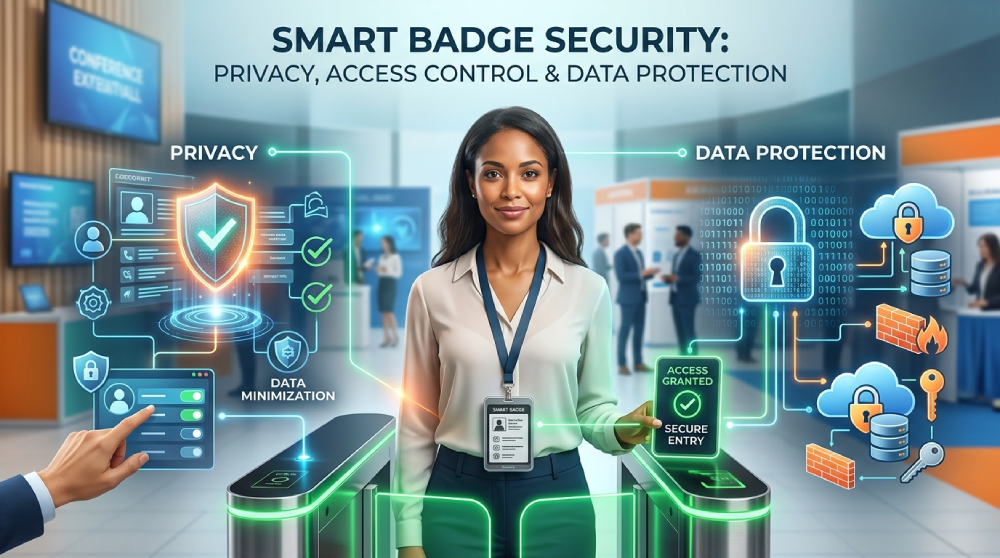
6. Improved Access Control and Event Security
Different people at an event often require different levels of access. Speakers, exhibitors, VIP guests, staff, media representatives, and general attendees may have access to different areas.
Smart badges can support this structure by assigning appropriate credentials to different attendee categories. For example, an exhibitor may have access to an exhibition hall, while a speaker may also be authorized to enter a speaker lounge or backstage area.
This provides organizers with a more structured approach to venue access. Depending on the system, badges can also be used to verify authorized attendees at controlled entrances. This can reduce dependence on manual checks and help event teams manage restricted areas more efficiently.
7. A More Personalized Attendee Experience
Modern attendees increasingly expect events to be convenient, connected, and relevant to their interests. Smart badges can contribute to a more personalized experience by connecting attendee information with other event technologies.
For example, an event platform may use an attendee's selected interests or registration category to highlight relevant sessions, exhibitors, or networking opportunities. The badge then becomes more than an identification credential; it becomes part of the attendee's overall event journey.
Personalization can also benefit organizers and exhibitors. Attendees may be directed toward information that is more relevant to them, while businesses can create more targeted interactions. As smart badge technology continues to develop, these capabilities can become increasingly integrated with mobile applications, event management platforms, CRM systems, and other digital tools.
Choosing the Right Smart Badge Solution
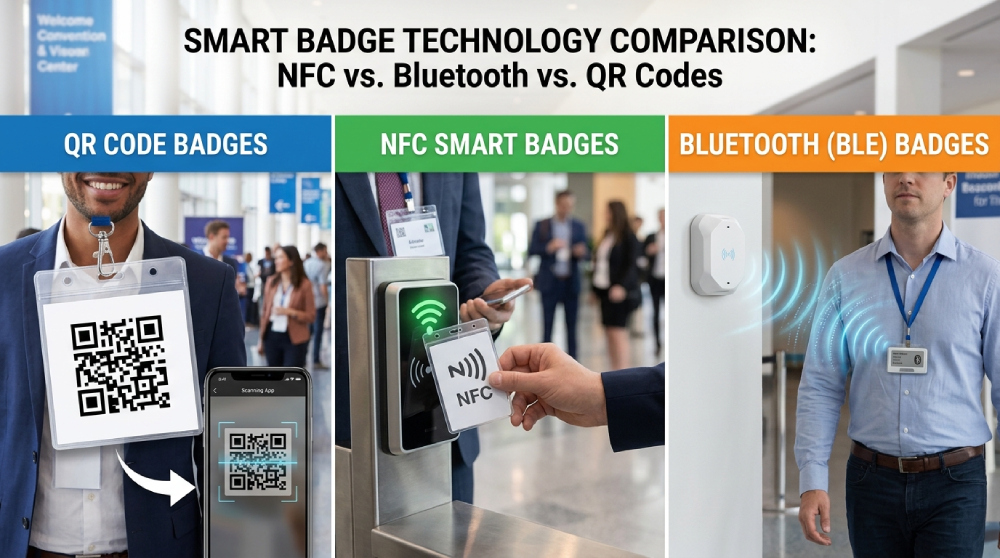
Not every event needs the same type of badge. The right solution depends on the event's size, audience, venue, technology infrastructure, and objectives. Before selecting a smart badge platform, organizers should consider factors such as:
Badge technology, including QR, NFC, or RFID
Integration with registration and event management software
Networking and lead-generation capabilities
Access-control requirements
Data security and attendee privacy
Scalability for future events
A solution should support the event's actual requirements rather than adding technology simply for the sake of modernization.
The Future of Smart Badges for Events
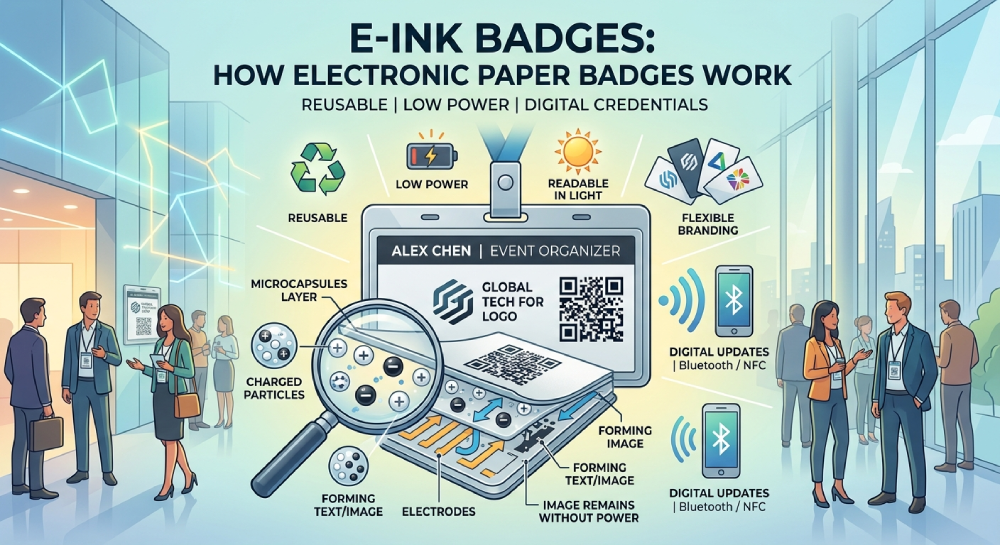
The growing adoption of smart badges for conferences, exhibitions, and corporate events reflects a broader move toward connected event experiences. As digital identity, contactless technology, event applications, and analytics continue to develop, badges can become an increasingly important part of event infrastructure.
The value of electronic smart badges goes beyond their appearance. Their real potential comes from connecting attendees with event services while helping organizers manage registration, access, networking, engagement, and data through a more integrated system.
For organizations planning modern events, smart badges can provide a practical foundation for creating smoother and more interactive experiences.
Conclusion
Smart badges are changing the traditional role of event credentials. Instead of simply displaying an attendee's name and organization, they can support multiple parts of the event journey, from check-in and networking to lead collection, access management, and analytics.
For event organizers, exhibitors, and attendees, the right smart event badge solution can help create a more connected experience while reducing some of the manual processes associated with traditional event management.
As events continue to evolve, smart badges are likely to become an increasingly important part of the technology used to bring people, information, and event operations together.
FAQs
What are smart badges for events?
Smart badges are digital or technology-enabled event credentials that can use technologies such as QR codes, NFC, or RFID. Depending on the system, they can support event check-in, access control, networking, lead collection, and attendee engagement.
How do smart badges improve event networking?
Smart badges can allow attendees to exchange selected contact information digitally through scanning or contactless interactions. This can make networking faster and reduce the need to manually exchange and organize business cards.
Are smart badges suitable for small events?
Yes. Smart badges can be used for events of different sizes. Small conferences and corporate events can use basic features such as digital check-in and networking, while larger exhibitions may require advanced access control, lead generation, and analytics.
What technology is used in smart event badges?
Smart badges can use different technologies depending on their purpose. Common options include QR codes, NFC, and RFID. Some event systems also connect badges with mobile applications and event management platforms to provide additional future.
Get the next article in your inbox
Stay updated with practical insights, product updates, and networking tips — delivered straight to your inbox.