Conferences offer professionals valuable opportunities to exchange ideas, discover business opportunities, and build lasting industry relationships. However, attending an event alone does not guarantee meaningful connections. Success depends on preparation, communication, and a clear plan. Effective conference networking strategies help professionals make the most of their time, meet relevant people, and turn brief conversations into long-term relationships.
Top Networking Strategies For Professionals?
Whether you are attending an industry summit, a business networking conference, or a startup event, the following strategies can help you network with confidence and achieve measurable results.
Set Clear Networking Goals Before the Event
Before attending a conference, identify what you want to accomplish. Having specific objectives helps you prioritize conversations and avoid spending the entire event meeting people without a clear purpose.
Your goals might include finding potential clients, meeting industry experts, exploring partnerships, or learning about emerging trends. Use these practical preparation steps:
Identify three to five professionals or organizations you want to meet.
Research speakers, exhibitors, and registered attendees when their information is available.
Prepare a short introduction explaining who you are, what you do, and what interests you about the event.
Following these conference networking tips helps you approach conversations with greater confidence. You can also review the event agenda and mark sessions where your target audience is likely to participate.
Research Attendees and Identify Relevant Connections
Researching participants before the event makes networking more focused. Review professional profiles, company websites, speaker biographies, and public event directories to identify people whose work aligns with your goals.
For example, a marketing professional looking for SaaS clients might prioritize founders, growth leaders, and business development managers. Use these methods to find relevant contacts:
Review LinkedIn profiles and company updates.
Explore speaker lists and exhibitor directories.
Identify shared professional interests or industry challenges that could start a conversation.
A conference networking app or digital event directory can make this process easier by helping attendees discover participants and arrange meetings. Preparing a shortlist also helps you make better use of networking breaks.
Start Conversations With Confidence
Approaching unfamiliar people can feel uncomfortable, especially at large events. The key is to begin with a relevant question instead of trying to deliver a perfect introduction.
Simple conference conversation starters include asking which sessions someone has enjoyed, what projects they are working on, or what brought them to the event. Consider these conversation techniques:
Ask open-ended questions that encourage detailed answers.
Listen carefully instead of planning your next response.
Share relevant experiences without dominating the discussion.
Introduce yourself naturally when there is an appropriate opening.
For example, you could say, “Hi, I'm a content strategist working with technology companies. What brings you to this conference?”
These conference networking ideas help conversations feel natural and create opportunities to discover shared interests.
Focus on Meaningful Connections, Not Numbers
Meeting dozens of people may seem productive, but the quality of your conversations matters more than the number of contacts you collect. Effective conference networking strategies prioritize relevant relationships and genuine professional interest.
Instead of moving quickly from one introduction to another, take time to understand what other attendees do, what challenges they face, and how you might help. A useful approach is to:
Identify shared goals or professional interests.
Offer helpful information or introduce relevant contacts when appropriate.
Exchange contact details only when both parties are interested.
Make a brief note about each conversation to support future follow-ups.
These habits help you build trust and make future conversations more personal. They are particularly valuable when meeting potential clients, employers, investors, or collaborators.
Use Networking Technology Strategically
Digital tools can make professional networking more organized, especially at large conferences where attendees have limited time.
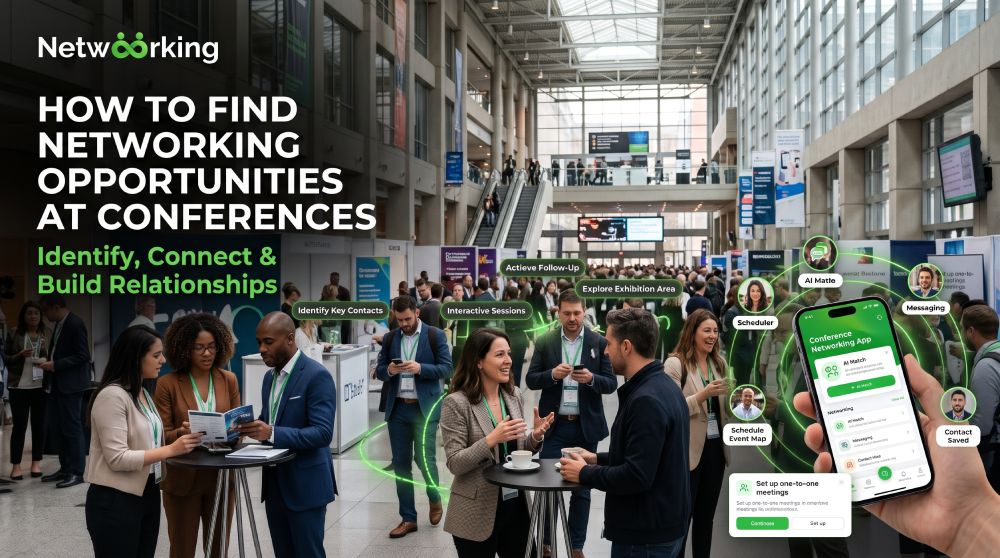
A suitable event networking platform may offer attendee matching, meeting scheduling, messaging, and access to event agendas. These features can help you identify relevant people before arriving and arrange conversations around scheduled sessions.
When using networking technology, focus on tools that support your goals rather than creating unnecessary notifications or distractions.
Networking Tool
How Professionals Can Use It
Main Advantage
Research people and maintain professional connections
Easier relationship management
Event networking app
Discover attendees and request meetings
More targeted introductions
Digital calendar
Schedule meetings and reminders
Better time management
Contact management tool
Record contact details and conversation notes
Organized follow-ups
Video meeting software
Continue conversations after hybrid or virtual events
Ongoing communication
For professional conference networking, technology should support face-to-face conversations rather than replace genuine interaction.
Follow Up After the Conference
Following up is essential for turning a brief introduction into a lasting professional relationship. Contacting someone soon after the event helps them remember your conversation and provides a natural way to continue discussing shared interests. Use these conference networking strategies after the event:
Send a personalized message within 24–48 hours when practical.
Mention where you met and refer to something specific you discussed.
Share a useful resource or agreed-upon information.
Suggest a follow-up meeting when there is a clear reason to continue the conversation.
For example, you might write, “It was great meeting you during the technology session. I enjoyed our discussion about content strategy and wanted to share the resource I mentioned.”
Avoid sending identical messages to every contact. A thoughtful, relevant follow-up is more likely to encourage a meaningful response.
Measure Your Networking Progress
Reviewing your results helps you understand which activities were worthwhile and how to improve your approach at future events. Track outcomes that reflect your objectives, such as relevant contacts made, follow-up conversations arranged, partnership discussions started, or useful insights gained.
You can maintain a simple spreadsheet with contact names, organizations, discussion topics, and next steps. Review it after the event to identify promising relationships and outstanding follow-ups.
Remember that professional relationships often develop over time. A conversation may not produce an immediate opportunity, but staying in touch and offering value can create future possibilities.
Conclusion
Successful networking requires preparation, genuine conversations, thoughtful use of technology, and consistent follow-up. By setting clear goals, researching attendees, asking relevant questions, and focusing on relationship quality, professionals can make conference attendance more valuable.
Apply these conference networking strategies consistently to build stronger professional relationships, discover opportunities, and develop a network that supports your long-term career or business goals.
FAQs
1. What is the best way to network at a conference?
Set clear goals, research attendees, start relevant conversations, and follow up afterward.
2. How many people should I meet at a conference?
Focus on a manageable number of relevant connections rather than a specific target.
3. When should I follow up after a conference?
Ideally, send a personalized message within 24–48 hours.
4. How can introverts network more comfortably?
Prepare conversation starters, schedule one-to-one meetings, and attend smaller networking sessions.
Get the next article in your inbox
Stay updated with practical insights, product updates, and networking tips — delivered straight to your inbox.