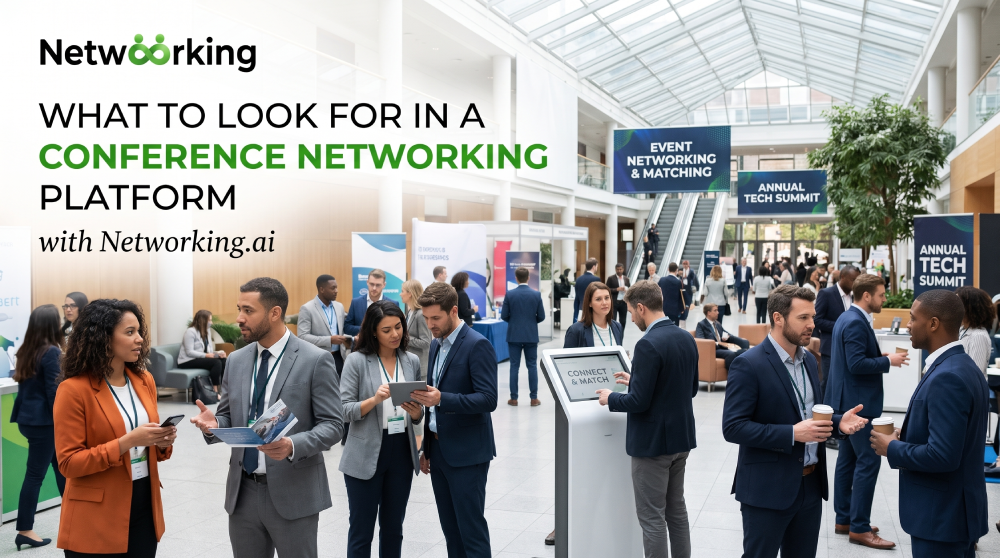
Conferences bring together industry experts, entrepreneurs, investors, and professionals who want to exchange ideas and build valuable relationships. However, meeting the right people can be challenging without the right technology. A Conference Networking Platform helps attendees discover relevant connections, schedule meetings, and continue conversations beyond the event.
Whether you are organizing a business conference, startup gathering, or industry summit, choosing the right platform can improve attendee engagement and make networking more productive
What to Look for in a Conference Networking Platform?
.Here are seven essential features to consider before making your decision.
Smart Networking and Attendee Matching
A networking platform should help attendees connect with people who share their professional interests, goals, or industry experience. Instead of relying entirely on chance encounters, users should be able to discover relevant contacts based on their profiles and preferences. Look for these smart matching capabilities:
Interest-based matching: Recommends attendees with similar professional interests and goals.
Industry and role filters: Helps users find investors, founders, recruiters, and industry experts.
Personalized recommendations: Suggests relevant connections based on attendee profiles and networking objectives.
These features make conference networking more purposeful and help attendees spend time with people who offer genuine opportunities. For organizers, better matching can also improve attendee satisfaction and encourage meaningful participation.
Essential Features to Compare
Before choosing a Conference Networking Platform, compare its core features to determine whether it meets your event's requirements. The following table highlights the capabilities worth evaluating.
| Feature | What to Look For | Main Benefit |
|---|---|---|
| Attendee profiles | Professional details, interests, and company information | Easier introductions |
| Smart matching | Recommendations based on goals and interests | More relevant connections |
| Meeting scheduling | Availability, calendar integration, and reminders | Organized meetings |
| Messaging | Private messages and connection requests | Continued conversations |
| Mobile accessibility | Responsive design or a dedicated app | Convenient access |
| Event agenda | Sessions, speakers, and networking activities | Better event planning |
| Analytics | Connection, meeting, and engagement reports | Measurable outcomes |
| Privacy and security | Access controls and transparent data policies | Greater user confidence |
Compare these features against your audience size, event format, budget, and technical requirements rather than selecting a solution based on its feature count alone.
Meeting Scheduling and Calendar Integration
Finding someone interesting is only the first step. Attendees also need a convenient way to arrange conversations without disrupting their conference schedules.
Prioritize these scheduling features:
Meeting requests: Allow attendees to request one-to-one conversations with relevant contacts.
Calendar integration: Help users coordinate meetings around presentations, workshops, and keynote sessions.
Automated reminders: Reduce missed meetings and scheduling confusion.
A reliable Conference Networking Platform should also make it easy to reschedule meetings when plans change. For hybrid events, support for virtual meeting links can help attendees connect regardless of their physical location.
These scheduling capabilities reduce organizational challenges and help participants make better use of their time.
Easy-to-Use Interface and Mobile Accessibility
Networking technology should simplify the attendee experience, not create additional work. If users struggle to navigate the interface, they may miss valuable opportunities or stop using the platform altogether.
Look for a clean dashboard, straightforward navigation, quick profile setup, and accessible search filters. Mobile compatibility is equally important because attendees frequently check schedules, messages, and meeting requests while moving between sessions.
An effective event networking platform should work smoothly across commonly used devices and provide a consistent experience. Before selecting a solution, test its registration process, search functionality, messaging features, and overall usability.
A simple, accessible interface encourages more attendees to participate and helps organizers deliver a smoother event experience.
Real-Time Messaging and Follow-Up Features
Networking does not end when a conversation finishes. Attendees need convenient ways to maintain relationships and continue discussions after the event.
Look for private messaging, connection requests, meeting confirmations, notification settings, and follow-up reminders. Saved contacts and personal notes can also help attendees remember important details about the people they meet.
For example, an entrepreneur could save an investor's profile during a conference and send a follow-up message afterward. Similarly, a job seeker could reconnect with a recruiter to discuss a potential opportunity.
These capabilities help transform brief introductions into longer-term professional relationships and make networking more valuable beyond the conference itself.
Event Agenda and Networking Activities
A strong platform should connect networking with the wider conference experience. Attendees benefit when they can explore the agenda, identify relevant sessions, and discover opportunities to meet other participants.
Look for features such as searchable schedules, speaker profiles, discussion groups, attendee recommendations, and interest-based networking sessions.
Some platforms also support virtual lounges, roundtable discussions, or organized introductions. These options can be especially useful for newcomers who may find spontaneous conversations difficult.
Organizers can use these features to introduce structured conference networking ideas, encourage participation, and create opportunities for attendees to connect around shared interests. Integrating networking with the event agenda also makes it easier for participants to balance learning sessions with professional conversations.
Analytics, Privacy, and Security
Organizers need to understand whether their networking activities are delivering meaningful results. A dependable platform should provide useful reporting while protecting attendee information. Consider these three areas:
Engagement analytics: Track connection requests, scheduled meetings, messaging activity, and participation.
Data protection: Review privacy policies, profile visibility settings, and data retention practices.
Attendee feedback: Gather feedback to understand whether participants made valuable connections.
Analytics can help organizers identify popular networking activities, understand participation patterns, and improve future events. However, the number of connections alone does not guarantee that attendees have developed meaningful relationships.
Privacy and security are equally important. Check how the platform handles personal information, controls profile visibility, protects messages, and manages data retention. Review its privacy policy and confirm that its practices align with applicable data protection requirements.
Conclusion
Prioritize smart matching, detailed profiles, scheduling, mobile accessibility, messaging, event integration, analytics, and privacy. Consider your audience size, event format, budget, and technical requirements before making a final decision.
The right solution can make networking more organized, encourage meaningful participation, and help conference organizers deliver a more valuable attendee experience.
FAQs
1. What is a conference networking platform?
It is a digital solution that helps conference attendees discover contacts, schedule meetings, and build professional relationships.
2. Which features are most important?
Smart matching, attendee profiles, meeting scheduling, messaging, and security are essential features.
3. Can a networking platform support virtual conferences?
Yes. Many platforms offer virtual meetings, messaging, attendee matching, and online networking sessions.
4. How can organizers measure networking success?
Organizers can track meetings, connections, engagement rates, attendee feedback, and follow-up activity.
Get the next article in your inbox
Stay updated with practical insights, product updates, and networking tips — delivered straight to your inbox.