Conferences bring together professionals, industry experts, entrepreneurs, and potential business partners. However, attending an event does not automatically lead to valuable relationships. The real benefit comes from having purposeful conversations, sharing knowledge, and staying in touch after the event.
How to Make Meaningful Connections at Conferences?
Learning how to make connections at conferences helps you move beyond exchanging business cards and build relationships that support your professional growth. With the right preparation and approach, even a short conversation can lead to future opportunities.
Set Clear Networking Goals
Before attending a conference, decide what you want to achieve. You might want to meet potential clients, learn from industry leaders, find collaborators, or explore career opportunities.
Review the event agenda, speaker profiles, and attendee information to identify people relevant to your goals. These conference networking tips help you spend your time strategically rather than approaching people randomly. Set two or three realistic goals, such as meeting five relevant professionals or arranging one follow-up meeting.
Prepare a Natural Introduction
A clear introduction makes it easier for others to understand who you are and what you do. Instead of delivering a lengthy sales pitch, explain your role, expertise, or current interests in a few sentences. For example:
“Hi, I’m Sarah. I work in content strategy and SEO, helping businesses improve their online visibility. I’m interested in learning how companies are adapting to AI-powered search.”
Then ask an open-ended question about the other person’s work. This approach makes professional conference networking feel like a genuine conversation rather than a formal sales interaction.
Choose the Right Networking Opportunities
Not every valuable conversation happens during scheduled networking sessions. Coffee breaks, workshops, panel discussions, and informal gatherings can provide excellent opportunities to connect.
Explore relevant conference networking opportunities before the event begins. Smaller group discussions may be more comfortable than approaching someone in a crowded exhibition hall.
You can also attend business meetups or industry-specific gatherings where participants share similar professional interests. These environments often make it easier to establish common ground and continue conversations beyond the main conference.
Ask Questions and Listen Carefully
Meaningful connections develop when both people feel heard. Instead of focusing on what you want to say next, listen carefully to the other person's answers and ask thoughtful follow-up questions. Useful conference conversation starters include:
What brought you to this conference?
Which session has been most valuable so far?
What challenges are you currently working on?
What trends are you seeing in your industry?
Look for shared interests, experiences, or challenges. Remembering a small detail from a conversation can make your next interaction more personal and memorable.
Use Technology to Find Relevant People
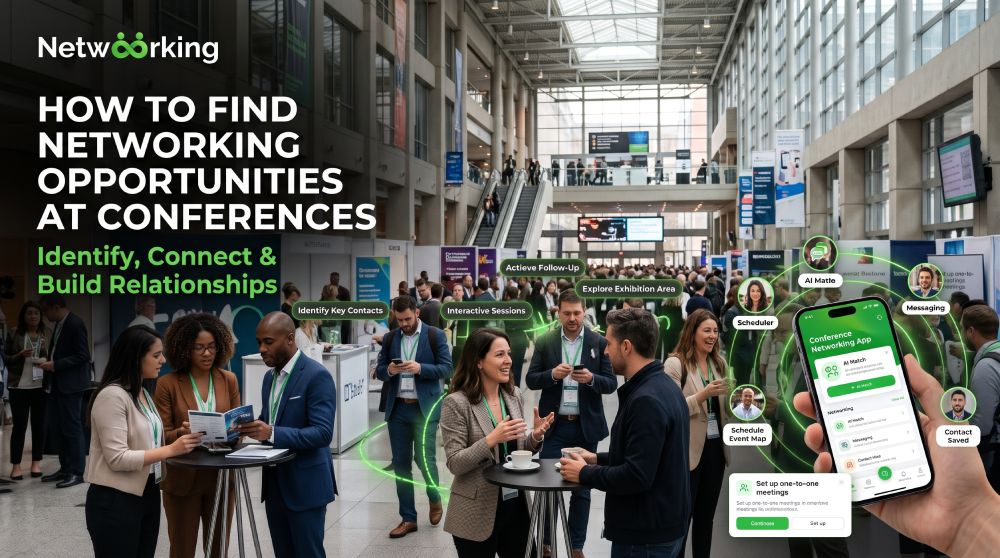
Digital tools can make networking more organized, especially at large events. A conference networking app may help attendees discover relevant participants, arrange meetings, and exchange contact information.
An event networking platform can also support attendee matching and facilitate introductions based on professional interests. Before the conference, complete your profile, identify relevant participants, and send personalized meeting requests where appropriate.
Technology should support real conversations, not replace them. Use these tools to identify promising connections and make in-person interactions more productive.
Focus on Relationships, Not Immediate Results
Avoid treating every conversation as a direct sales opportunity. Instead, focus on understanding the other person's goals and identifying ways you might help each other.
Sharing a useful resource, introducing two professionals, or offering a practical suggestion can create a positive impression. These conference networking strategies help establish trust without putting pressure on either person.
You do not need to meet everyone. Building a few relevant relationships is often more valuable than collecting dozens of contacts you will never speak to again.
Follow Up After the Conference
Following up is essential if you want a brief conversation to become a lasting professional relationship. Send a personalized message within a day or two while the discussion is still fresh.
Mention where you met, refer to something you discussed, and suggest a relevant next step. For example, you could share an article, offer an introduction, or arrange a short virtual meeting.
Effective conference networking software can help organize contacts and track follow-up tasks, particularly when you attend multiple events. However, your messages should remain personal rather than generic.
Consistent communication, genuine interest, and mutual value are what turn initial introductions into meaningful professional relationships.
Conclusion
Knowing how to make connections at conferences requires preparation, active listening, thoughtful conversations, and consistent follow-up. Choose relevant people to meet, focus on shared interests, and look for opportunities to provide value. By prioritizing relationships over quick results, you can turn conference conversations into lasting professional connections.
FAQs
1. How do you make meaningful connections at conferences?
Set clear goals, ask thoughtful questions, listen actively, and follow up after the event.
2. How many people should you meet at a conference?
Aim for a manageable number of relevant contacts rather than meeting everyone.
3. When should you follow up after a conference?
Ideally, within 24–48 hours of meeting someone.
4. What should you avoid when networking at conferences?
Avoid aggressive selling, interrupting others, and sending generic follow-up messages.
Get the next article in your inbox
Stay updated with practical insights, product updates, and networking tips — delivered straight to your inbox.