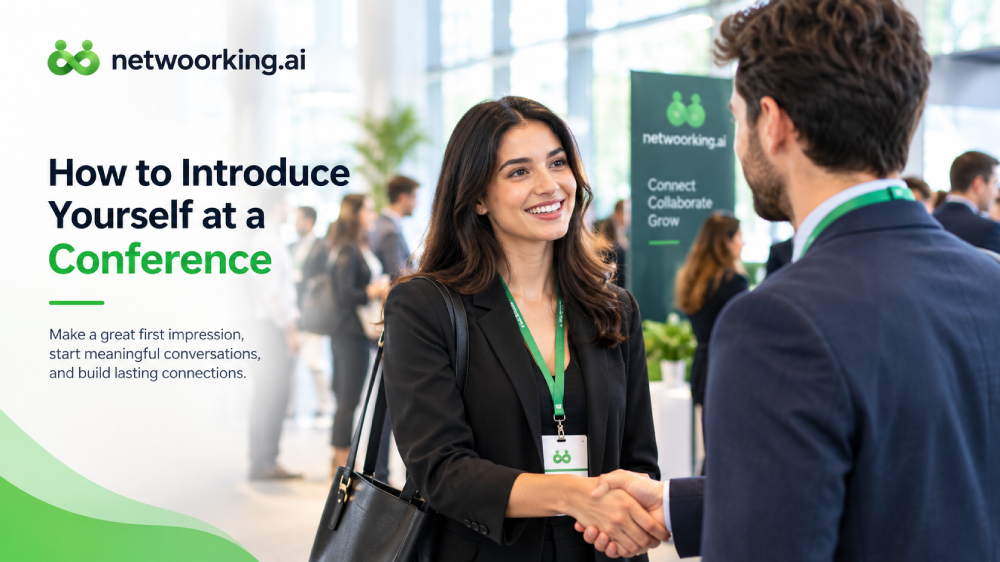
Knowing how to introduce yourself at a conference can help you turn brief conversations into valuable professional relationships. Whether you are attending a business summit, industry exhibition, or startup gathering, a confident introduction makes it easier to connect with people who share your interests and goals.
How to Introduce Yourself at a Conference?
You do not need a perfect speech or an impressive job title to make a good first impression. A clear introduction, genuine curiosity, and a willingness to listen are often enough to start a meaningful conversation.
Prepare a Short and Clear Introduction
Before attending an event, prepare a 20–30-second introduction that explains who you are, what you do, and why you are attending. This makes conference networking more natural and helps you communicate your professional value without overwhelming the other person.
Your introduction should include your name, role or area of expertise, and one relevant detail about your work or interests. For example:
"Hi, I'm Sarah. I'm a content strategist working with technology companies to improve their online visibility. I'm here to learn about emerging marketing trends and connect with other professionals in the industry."
Keep your introduction conversational rather than memorized. Adjust it according to the person you are speaking with and the event's purpose.
Adapt Your Introduction to the Situation
Different settings call for different approaches. Understanding how to introduce yourself at a conference means knowing when to keep your introduction brief and when to provide more context.
Business conferences: Mention your role, industry, and a professional interest.
Startup networking events: Explain what you are building, your expertise, or the problem you want to solve.
Academic conferences: Share your research area and what you hope to learn from other attendees.
Virtual events: Introduce yourself in the chat or during a breakout session, keeping your message relevant to the discussion.
For a conference presentation, introduce your name, professional affiliation, and topic before moving directly into your main points. During a conference call, briefly explain your role and connection to the meeting's agenda.
Use Open-Ended Questions to Start Conversations
An introduction works best when it leads to a two-way conversation. Instead of immediately promoting your services, ask questions that encourage the other person to share their experiences. Effective conference networking tips include asking questions such as:
What brought you to this conference?
Which session has been most useful so far?
What projects are you currently working on?
What trends are you following in your industry?
Have you attended this event before?
These conference conversation starters make it easier to find common ground without forcing the discussion. Listen carefully to the answers and ask relevant follow-up questions instead of planning your next statement while the other person speaks.
Make Your Body Language Approachable
Your nonverbal communication influences how people perceive your introduction. Stand comfortably, maintain natural eye contact, smile when appropriate, and speak clearly.
Avoid constantly checking your phone or interrupting conversations. If someone is speaking with a group, wait for a suitable moment before joining.
For conference networking for beginners, starting with one person or a small group can feel less intimidating than approaching a crowded room. Focus on having one meaningful conversation at a time rather than trying to meet everyone.
Find Relevant People Before the Event
You can make introductions easier by identifying attendees, speakers, and exhibitors you would like to meet. Review the agenda, speaker biographies, and event community before arriving.
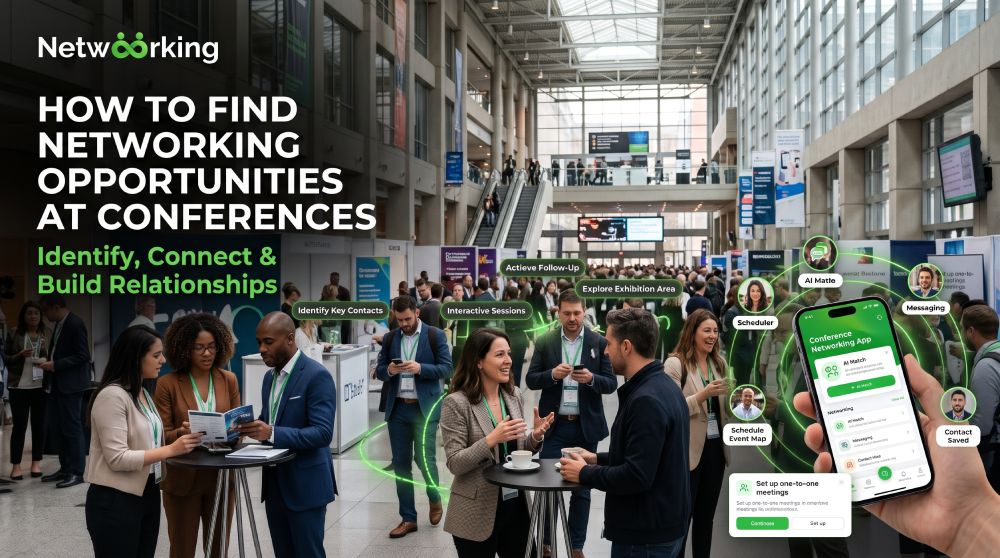
A conference networking app or event networking platform may help you discover attendees with similar professional interests. Some platforms offer attendee profiles, messaging, meeting scheduling, and recommendations based on shared goals.
Netwoorking AI focuses on smart networking and matching, helping professionals identify relevant connections and make their networking efforts more purposeful.
End Conversations Gracefully
A successful introduction does not require a long conversation. When you have exchanged useful information, close politely and leave room for future contact. You could say:
"It was great learning about your work. Would you be open to connecting on LinkedIn?"
Or:
"I enjoyed our conversation. I would love to hear more about your project sometime."
Exchange contact details when there is mutual interest. Mention something specific from your conversation in your connection request so the person remembers who you are.
Follow Up After the Conference
Following up helps turn an initial introduction into a lasting professional relationship. Send a personalized message within a day or two, referring to a topic you discussed or a session you both attended. For example:
"Hi Alex, it was great meeting you at the conference yesterday. I enjoyed our conversation about AI-driven marketing. I'd love to stay connected and continue exchanging ideas."
Avoid sending generic sales messages immediately after meeting someone. Instead, focus on building trust, sharing relevant resources, and identifying opportunities for future collaboration.
Conclusion
Learning how to introduce yourself at a conference is about communicating clearly, showing genuine interest, and making it easy for others to connect with you. Prepare a short introduction, ask thoughtful questions, maintain approachable body language, and follow up with the people you meet. With preparation and practice, every conference can become an opportunity to build stronger professional relationships and discover new possibilities.
FAQs
1. How long should a conference introduction be?
Aim for 20–30 seconds, including your name, role, and professional interests.
2. What should I say when introducing myself at a conference?
State your name, explain what you do, and mention why you are attending.
3. How do I introduce myself if I am nervous?
Start with a simple greeting and ask the other person what brought them to the event.
4. Should I follow up after meeting someone at a conference?
Yes. Send a personalized message within one or two days to continue the conversation.
Get the next article in your inbox
Stay updated with practical insights, product updates, and networking tips — delivered straight to your inbox.