Conferences bring together industry experts, business leaders, entrepreneurs, investors, and professionals who share similar interests. However, attending an event does not automatically lead to valuable connections. You need a clear strategy to identify the right people, start meaningful conversations, and build relationships that continue after the event.
Finding networking opportunities requires preparation, active participation, and consistent follow-up.
How to Find Networking Opportunities at Conferences?
Whether you are attending a business conference, startup event, or professional summit, the following strategies can help you make the most of your experience.
1. Research the Conference Before Attending
Preparation is the first step toward successful conference networking. Before the event, review its agenda, speaker profiles, attendee information, and exhibitor list. These resources can help you identify professionals whose experience, interests, or goals align with yours.
Look for people working in your industry, potential clients, investors, mentors, or collaborators. Make a shortlist of five to ten people you would like to meet.
Review their LinkedIn profiles and recent professional activities to understand their interests. This research helps you prepare relevant questions and start conversations naturally.
Identifying networking opportunities before arriving also prevents you from spending the entire event meeting people without a clear purpose.
2. Use Conference Apps and Networking Platforms
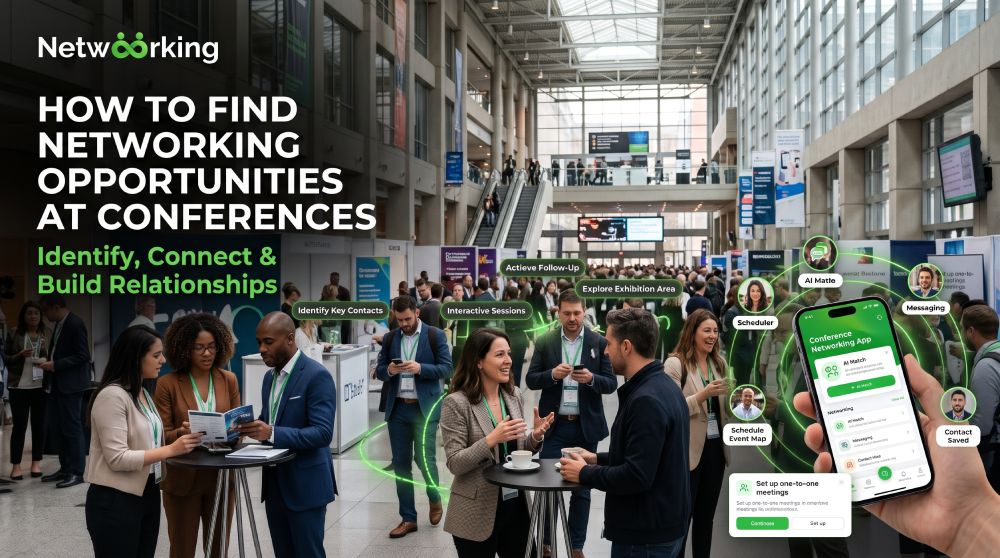
Many conferences offer dedicated mobile apps that include attendee directories, speaker information, meeting schedulers, and messaging features. These tools make it easier to connect with relevant professionals before and during the event.
Complete your profile, add a professional photograph, and write a concise introduction explaining your role and interests. Use available filters to find attendees based on industry, job title, location, or professional goals.
Professional networking platforms can also help you discover people attending the same conference. Send personalized connection requests and mention the event or a session you both plan to attend.
Digital tools make it easier to arrange introductions and identify networking opportunities that match your professional objectives.
3. Attend Sessions That Match Your Interests
Conference sessions are more than opportunities to learn. They provide natural conversation starters and bring together people interested in the same topics.
Choose presentations, panel discussions, and workshops relevant to your career or business goals. Participate in question-and-answer sessions when appropriate, and take note of speakers whose insights interest you.
After a session, approach the speaker or another attendee and refer to a specific point from the discussion. For example, you could ask how a particular industry trend affects their organization. These conversations feel more natural because they begin with a shared experience rather than an unsolicited introduction.
4. Make the Most of Breaks and Social Events
Some of the most valuable professional connections happen outside formal presentations. Coffee breaks, networking lunches, exhibition areas, and evening receptions provide relaxed environments for meeting people.
Instead of checking your phone throughout every break, look for opportunities to introduce yourself to individuals or join small group conversations. Start with simple, open-ended questions, such as:
Which conference session has been most useful to you?
What projects are you currently working on?
What brought you to this event?
Which industry trends are you following?
Listen carefully, show genuine interest, and share relevant information about your own work. Meaningful conversations are more valuable than collecting dozens of business cards.
5. Prepare a Clear and Memorable Introduction
A short professional introduction helps people understand who you are and what you do. Aim to explain your role, expertise, and current interests in approximately 20–30 seconds.
For example: “I work in SEO and content strategy, helping technology businesses improve their online visibility. I'm particularly interested in how AI is changing digital marketing.”
Adapt your introduction to the person you are speaking with. If you meet a potential client, focus on relevant business challenges. If you meet a fellow professional, discuss shared interests or industry developments.
Avoid turning every conversation into a sales pitch. Ask questions, exchange ideas, and allow the relationship to develop naturally.
6. Set Up One-to-One Meetings
If you identify important contacts before the conference, consider arranging brief meetings in advance. A 15-minute coffee meeting can provide more focused discussion than a short conversation in a crowded exhibition hall.
Explain why you would like to meet and suggest a convenient time and location. Respect the other person's schedule and keep the discussion focused on shared interests.
One-to-one meetings are particularly useful for exploring partnerships, discussing career opportunities, learning from experienced professionals, or introducing a business idea.
When planning these meetings, prioritize mutual value rather than focusing exclusively on what you want to gain.
7. Follow Up After the Conference
Conference networking does not end when the event finishes. Following up helps transform initial introductions into lasting professional relationships.
Within 24–48 hours, send a personalized LinkedIn message or email. Mention something specific from your conversation to help the recipient remember you.
For example, thank them for discussing an industry challenge, share a useful resource, or suggest continuing a conversation about a shared project.
Avoid sending generic messages to every attendee. Instead, focus on the contacts with whom you established genuine rapport. Stay in touch occasionally by sharing relevant insights, congratulating them on professional achievements, or arranging another conversation.
Consistent follow-up turns brief introductions into relationships that can support future collaboration, learning, and career development.
Conclusion
Finding valuable conference connections requires more than simply showing up. Research attendees in advance, use professional networking tools, participate in relevant sessions, engage during breaks, and approach conversations with genuine curiosity.
The best networking opportunities often come from shared interests and thoughtful interactions rather than formal introductions alone. By setting clear goals and following up consistently, you can turn a single conference into a valuable source of professional relationships, partnerships, and future opportunities.
FAQs
1. How do I find people to network with at a conference?
Review the attendee list, speaker profiles, conference app, and LinkedIn to identify professionals with relevant interests.
2. What is the best way to start a conversation at a conference?
Ask an open-ended question about a session, industry trend, or the person's reason for attending.
3. When should I follow up after a conference?
Ideally, send a personalized message within 24–48 hours of meeting someone.
4. How many people should I try to meet at a conference?
Focus on making five to ten meaningful connections rather than collecting as many contacts as possible.
Get the next article in your inbox
Stay updated with practical insights, product updates, and networking tips — delivered straight to your inbox.