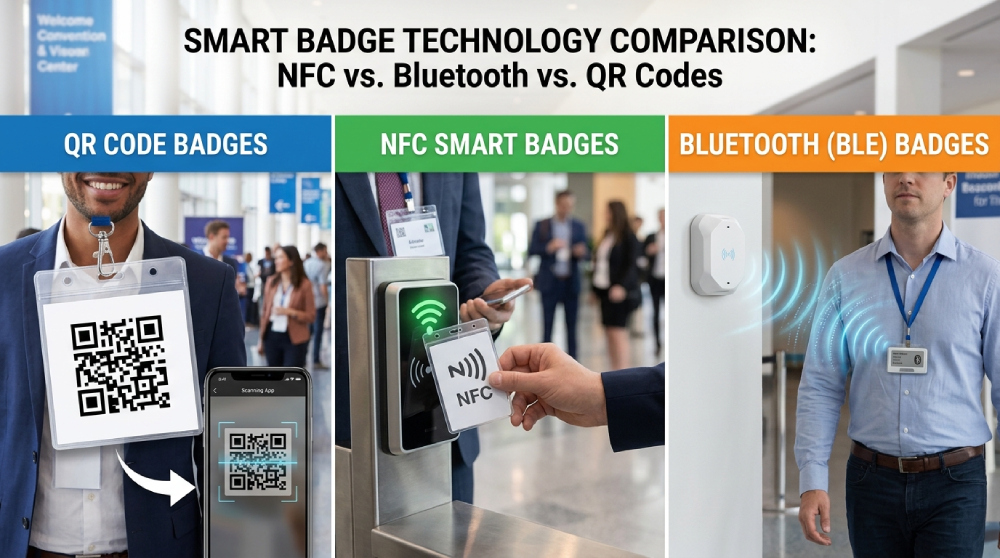
NFC vs. Bluetooth vs. QR Smart Badges: Key Differences
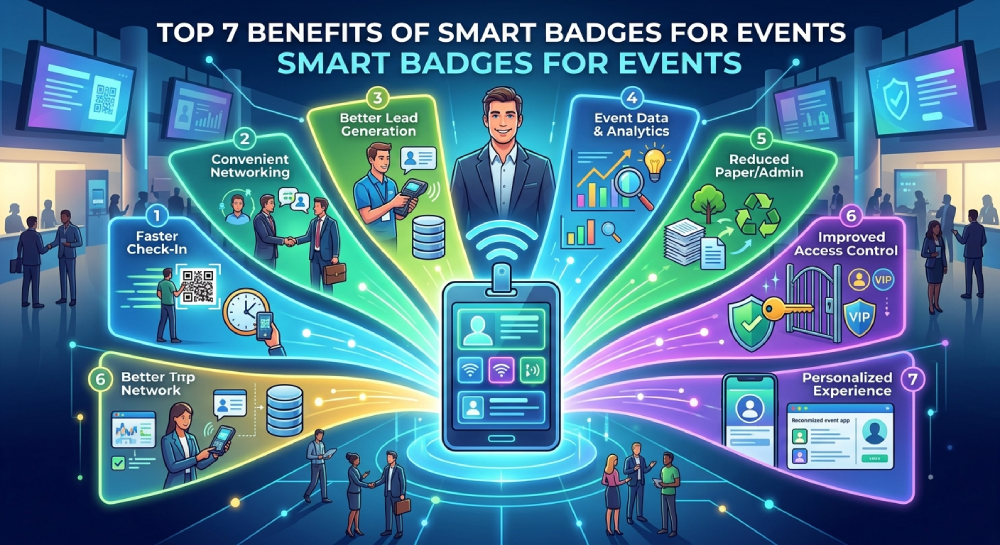
Event technology has changed significantly in recent years. Badges are no longer limited to displaying an attendee's name and company. Modern smart badge solutions can support networking, registration, access control, information sharing, and attendee engagement through technologies such as NFC, Bluetooth, and QR codes.
But which technology should an organizer choose? NFC, Bluetooth, and QR codes all work differently. NFC enables short-range contactless interactions, Bluetooth supports wireless communication over greater distances, while QR codes provide a simple visual method for connecting a physical badge to digital information. Understanding these differences is important when evaluating smart badge technology for conferences, exhibitions, corporate events, and other gatherings.
What Are Smart Badges?
Modern interactive name badges can contain QR codes, NFC chips, Bluetooth components, electronic displays, or combinations of these technologies. Some electronic smart badges can even update the information displayed on the badge.
The exact features depend on the event badge system, hardware, software, and connectivity used by the organizer.
NFC Smart Badges: How They Work
NFC, or Near Field Communication, is designed for very short-range wireless communication. An NFC interaction generally requires the badge and compatible reader or smartphone to be brought close together.
This makes NFC particularly useful for intentional interactions. An attendee can tap their badge against a compatible device to share information, open a digital profile, access a venue area, or trigger another configured action.
NFC tags can operate without their own battery when powered by a compatible reader. NFC is therefore different from Bluetooth, which normally requires a powered device for communication.
For event networking, NFC can make an interactive badge feel simple and immediate. An attendee can tap rather than search for a printed business card or manually type contact information. NFC can be especially useful for:
Contactless networking
Access control
Digital profile sharing
Attendee engagement
Controlled interactions at exhibitor booths
Bluetooth Smart Badges: How They Work
Bluetooth provides a different approach. Instead of requiring a physical tap, a bluetooth smart badge can communicate wirelessly with compatible devices within its operating range.
Bluetooth technologies can support longer-range communication than NFC. Depending on the implementation, Bluetooth can therefore be useful for proximity-based interactions, location-related functionality, notifications, and connections between badges and smartphones or event infrastructure.
A Bluetooth-enabled badge may be connected with an application or event platform. This can create possibilities for automated interactions that do not require attendees to deliberately scan or tap their badges.
However, Bluetooth systems can involve additional hardware, configuration, pairing, software integration, and battery requirements. These factors can make them more complex than a simple QR-based solution.
For larger events with advanced engagement requirements, Bluetooth can become part of a broader connected smartbadge tech ecosystem.
QR Smart Badges: How They Work
QR codes are perhaps the simplest technology used in modern event credentials. A QR code can be printed directly onto a conventional badge or displayed on a smart digital display badge.
Attendees simply use their smartphone camera or QR scanner to access the information connected to the code. Unlike NFC and Bluetooth, a printed QR code does not require a battery or wireless chip. This makes QR-based badges relatively straightforward to produce and deploy. A QR code can link to:
An attendee's professional profile
Contact information
Event schedules
Registration details
Exhibitor pages
Networking forms
Digital content
For organizations seeking a simple and accessible programmable badge, QR technology can provide considerable flexibility without requiring specialized readers.
NFC vs. Bluetooth vs. QR: Key Differences
The biggest difference between these technologies is how the interaction happens.
NFC requires close proximity and usually involves a deliberate tap. Bluetooth can support wireless communication across a greater distance, depending on the implementation. QR codes rely on visual scanning using a camera or compatible reader. This means the appropriate technology depends heavily on the event's objectives.
For example, a networking-focused conference might use NFC for quick contact sharing, while an event platform requiring proximity-based interactions might incorporate Bluetooth. A smaller event that primarily needs digital profiles may find QR codes sufficient.
A modern wearable badge can also combine multiple technologies. For instance, an organizer could use an electronic display for attendee identification, NFC for networking, and a QR code as a backup access method.
Smart Badges and Electronic Displays
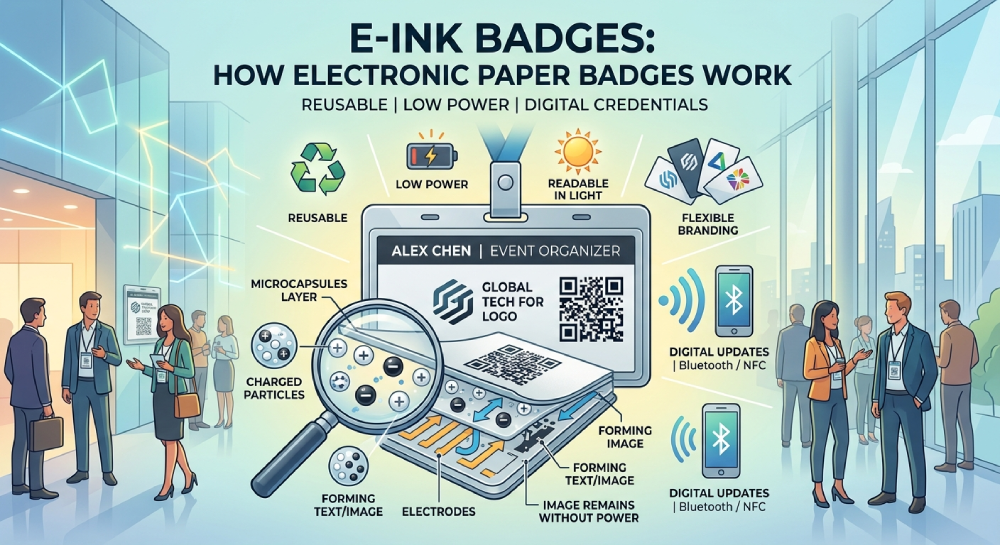
Not every smart badge needs to be a traditional printed credential. Electronic badges for conferences can use technologies such as E-Ink to display attendee information digitally. An e ink badge can show names, roles, company information, logos, or other event details while consuming very little power when the displayed image remains unchanged.
An e-ink name badge can be particularly useful for reusable credentials because information can be updated without printing a completely new badge. Other formats may include an e ink id card or e ink id badge, allowing organizations to use electronic displays for employee identification, visitor management, exhibitions, and conferences.
Some products may also use an e badge clip on screen design, where a small electronic display is attached to clothing or a traditional badge holder. These technologies demonstrate that digital name badges can combine visual identification with wireless functionality.
How Smart Badges Improve Event Networking
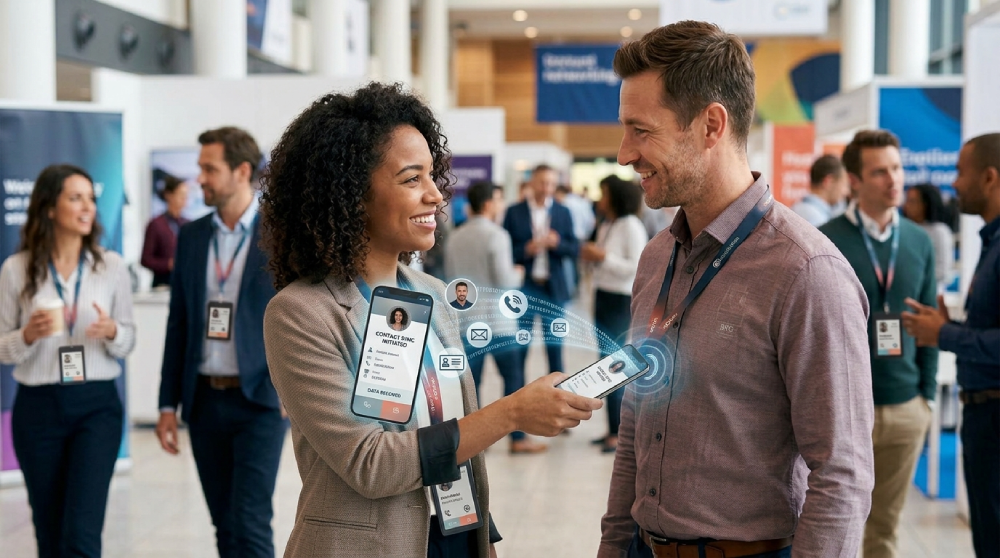
Networking is one of the strongest use cases for modern event credentials. Traditional badges identify people, but technology-enabled credentials can help people connect.
NFC is particularly useful when attendees want to intentionally exchange information with a tap. QR codes can provide a similar function through smartphone scanning. Bluetooth can support more automated proximity-based experiences when the necessary infrastructure is available.
This makes best electronic badges for event networking a broad category rather than a single technology. For organizers comparing the best smart badges for events, the right choice depends on whether the priority is simplicity, contactless interaction, automation, or advanced connectivity.
Smart Badges for Different Event Types
Different environments can benefit from different badge technologies. For conferences, smart badges for conferences can connect attendees to professional profiles, session information, and networking tools. Smart conference badges can also support access management and exhibitor interactions.
Exhibitions can use smart event badges to connect visitors with exhibitors and digital product information. Similarly, event smart badges can support registration, engagement, and lead-generation workflows.
Schools and educational organizations can also use smart badges for schools for identification, access, attendance, or campus-related applications. For attendance-focused environments, attendance badges can be integrated into systems that record entry or participation. The important point is that badge technology should match the operational needs of the organization rather than simply following the latest trend.
Choosing the Right Smart Badge Technology
There is no universal solution for every event. When comparing technologies, organizers should consider the interaction they want attendees to perform, the available infrastructure, and the desired level of automation.
NFC can be suitable when close-range, intentional interactions are required. QR codes can be useful when accessibility, simplicity, and lower hardware requirements are priorities. Bluetooth may be appropriate for applications involving proximity and more continuous wireless communication.
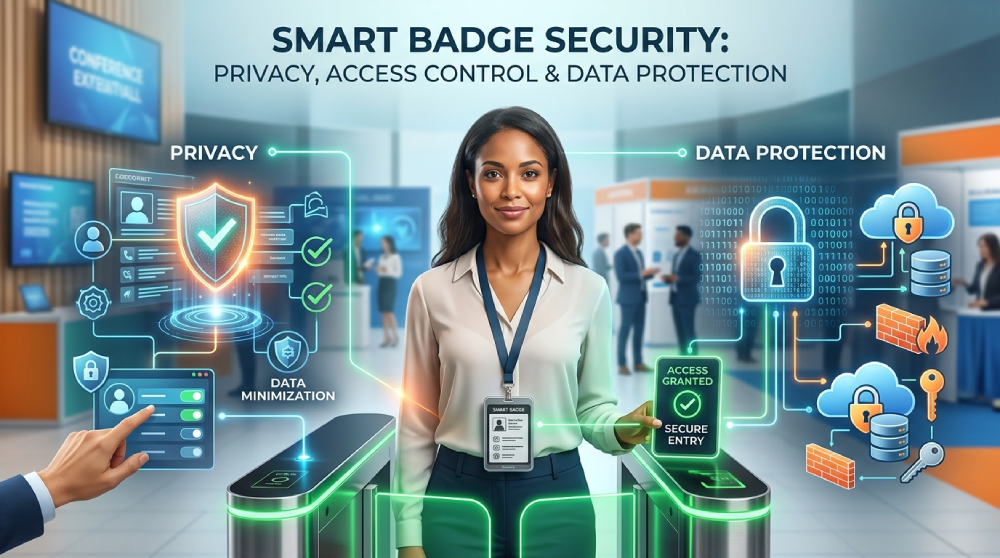
The decision should also consider battery requirements, smartphone compatibility, security, software integration, scalability, and cost. Organizations researching top event badge technology solutions should therefore evaluate the complete ecosystem rather than comparing hardware alone.
Smart Badge Market and Future Trends
The smart badge market is developing alongside broader trends in digital events, contactless technology, and connected experiences. As event organizers look for ways to improve engagement and reduce manual processes, badges are increasingly becoming part of digital event platforms. The market now includes everything from simple QR credentials to NFC cards, Bluetooth-enabled wearables, and sophisticated electronic displays.
Organizations researching top smart badge providers for conferences should examine features such as software integrations, customization, analytics, security, hardware durability, and support.
Similarly, searches for top rated smart badges for conferences should not focus only on ratings. The most important question is whether a badge solution fits the event's audience, infrastructure, and objectives.
Which Technology Should You Choose?
Rather than asking which technology is universally better, event organizers should ask which technology matches their requirements. A QR-based credential may be sufficient for an event that primarily needs digital information sharing. NFC can provide a more intentional contactless experience, while Bluetooth can support more advanced proximity-based applications.
For sophisticated deployments, combining technologies may provide greater flexibility. A single smartbadge for events could potentially use a QR code for universal smartphone access, NFC for tap-based networking, and an electronic display for dynamic identification.
This multi-technology approach can make a programmable badges platform more versatile while allowing organizers to provide different interaction methods for attendees.
Conclusion
NFC, Bluetooth, and QR codes each have different strengths within the growing world of smart badge technology. NFC focuses on close-range interactions, Bluetooth enables wireless communication across greater distances, and QR codes offer a simple way to connect physical credentials with digital information.
When selecting smart id badges, organizers should consider event size, networking goals, access requirements, available infrastructure, attendee experience, and budget.
Whether an organization chooses a QR credential, NFC solution, Bluetooth system, or a combination, modern badges can transform a basic identification tool into a more useful digital touchpoint.
Frequently Asked Questions
1. Which is better for event badges: NFC or QR?
NFC offers tap-based interaction, while QR codes are scanned using a smartphone. The appropriate option depends on the event's requirements and infrastructure.
2. Can a smart badge use NFC and QR together?
Yes. A badge can combine NFC with a QR code to provide attendees with multiple ways to access digital information or networking features.
3. Does a Bluetooth smart badge need a battery?
Generally, Bluetooth-enabled hardware requires power to communicate wirelessly. Battery requirements depend on the badge design and how frequently it communicates.
4. Are E-Ink badges smart badges?
They can be. An E-Ink badge provides a digital display and can be combined with NFC, QR, Bluetooth, or other technologies to create a multifunctional badge.
5. What should organizers consider when choosing a smart badge?
Organizers should consider connectivity, attendee experience, event size, security, battery requirements, software integration, networking needs, and overall implementation cost.
Get the next article in your inbox
Stay updated with practical insights, product updates, and networking tips — delivered straight to your inbox.